
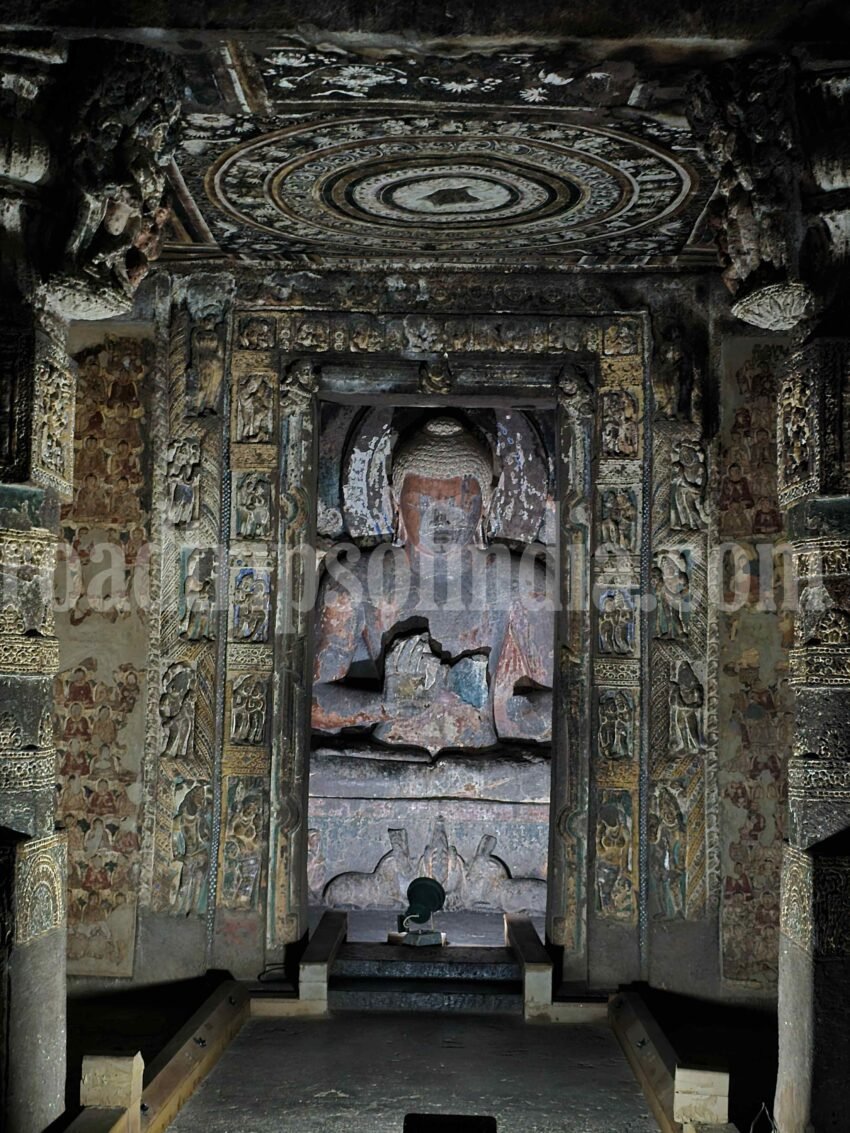
Plan your trip to Ajanta Caves in Maharashtra with this fun, detailed and complete guide! Learn history, see paintings, travel tips.
I still remember how we first heard about the Ajanta Caves in school. Those little pictures in the history book — old rock-cut caves, Buddhist monks, paintings done centuries ago. I never thought much of it back then. Just another chapter to get through before the bell rang.
But standing there as an adult, actually inside those caves, was completely different.
It didn’t feel like I was looking at history.
It felt like history was quietly looking back at me.
The Ajanta Caves in Maharashtra are not dramatic or loud. They don’t overwhelm you all at once. They settle into you slowly, almost gently the way old memories do, when you remember them on quiet days.
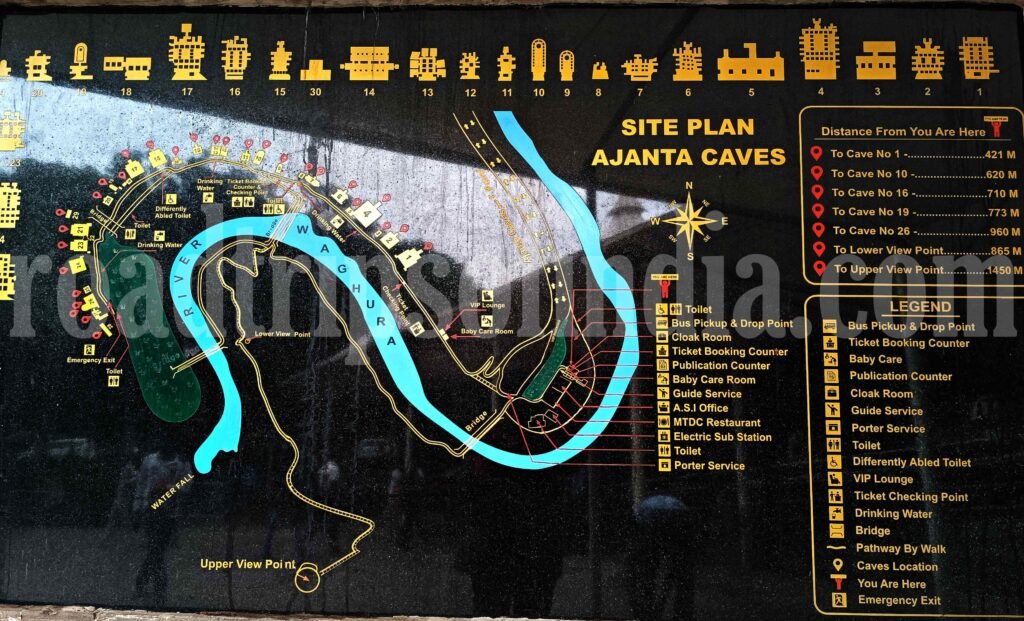
Where Are The Ajanta Caves?
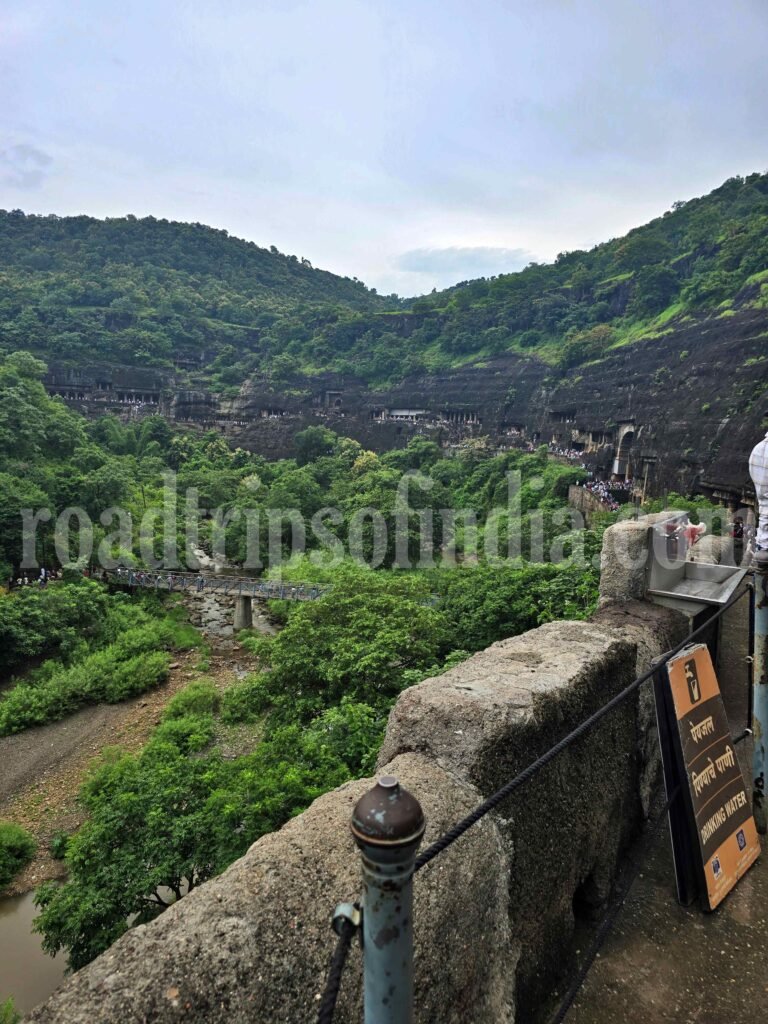
They’re about 105 km from Aurangabad (Chhatrapati Sambhaji Nagar). The drive is simple enough, but the last stretch when the valley suddenly opens up that’s when something shifts. The cave complex curves naturally along the cliff, almost like nature laid the foundation and humans simply followed its shape.
At the entrance area, you’ll take an eco-bus to reach the caves. It’s a short ride, but it feels like the world becomes quieter with each minute. Like you’re being taken somewhere tucked away from regular time.
Ajanta Caves History: More Gentle Than Grand
The Ajanta Caves history begins around the 2nd century BCE. Buddhist monks carved these caves into the rock — not to impress anyone, not to show power — but simply to live, to pray, to teach, to tell stories through art.
Later, during the Gupta period (around 5th century CE), artists returned and painted some of the most sensitive, graceful murals I have ever seen.
These caves weren’t made for kings.
They were made for silence.
For reflection.
And maybe that’s why the place feels so deeply human.
The caves were slowly forgotten over time. Trees and vines covered the valley. For centuries, they slept. Until 1819, when a British officer, supposedly searching for a tiger, noticed an opening in the cliff.
Ajanta Caves Paintings: Faces That Still Feel Alive
The Ajanta Caves paintings are honestly the part that surprised me the most. I expected old, faded art — something I’d admire politely and move on from.
But when my eyes adjusted to the dim light, the faces on the walls appeared gradually, like someone peeling back layers of time.
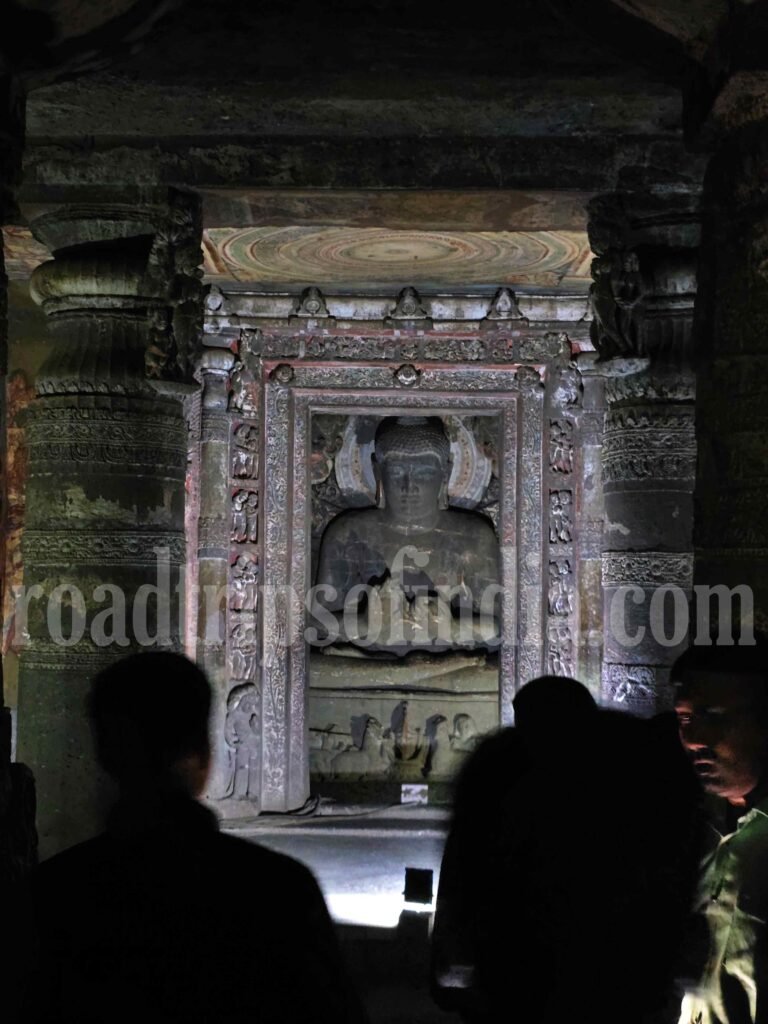
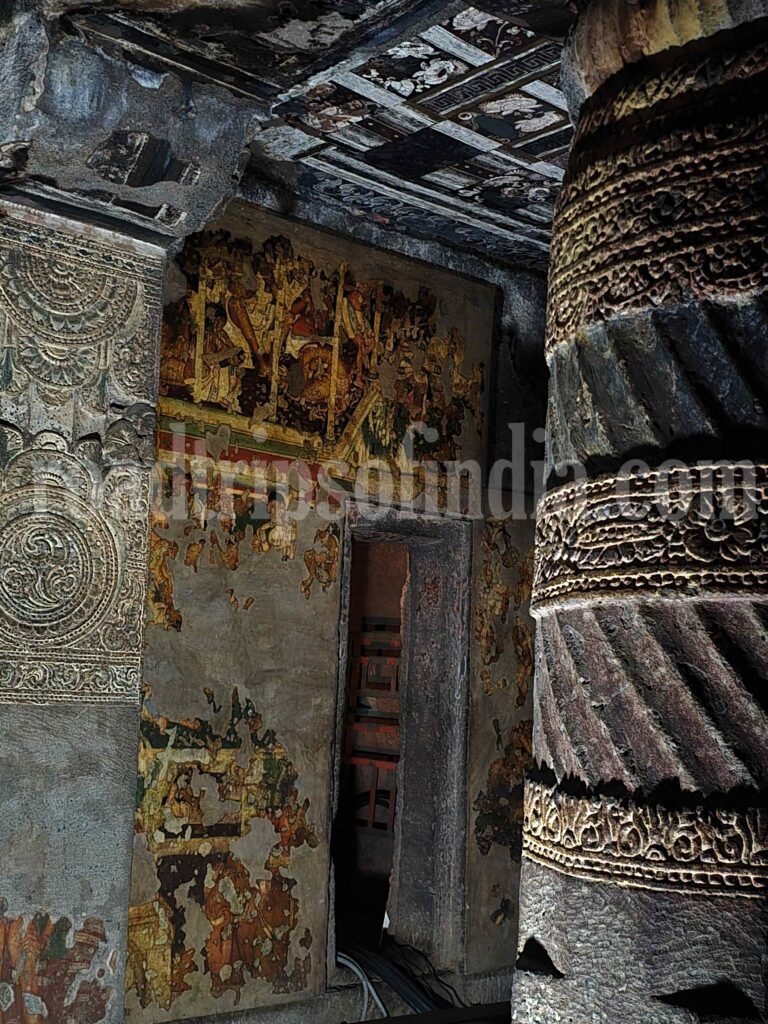
The expressions are soft.
The eyes are gentle.
The gestures are delicate, almost tender.
These murals tell stories from the Jataka Tales — stories of the Buddha’s past lives — but they also show everyday life: people thinking, waiting, longing, resting. There is a calmness to the lines — not rushed, not forced, just… present.
The most famous painting, Bodhisattva Padmapani, is not grand or dramatic. He just looks at you. Soft eyes. Steady. Kind.
I can’t explain it fully — you simply feel something soften inside.
What It Actually Feels Like to Be There
The pathway along the caves has steps — some steep, some shallow, some surprisingly smooth from centuries of feet. The view of the valley stays with you as you move.
When you enter the caves, the air is naturally cool. The walls swallow sound. Even if people are talking, the caves seem to hold the noise gently, never letting it become loud.
You don’t just look.
You slow down.
Your body slows before your mind notices.
Inside, the darkness is not frightening.
It’s grounding.
There’s a kind of silence here that we don’t get in cities anymore.
Ajanta Caves Images
You’ve probably seen Ajanta Caves images already — maybe in school, maybe on Google Images before planning your visit. But photos don’t show the way the murals gradually appear as your eyes adjust to shadow. They don’t show how the quiet changes the way you breathe. They don’t show how the paintings feel like they’re listening.
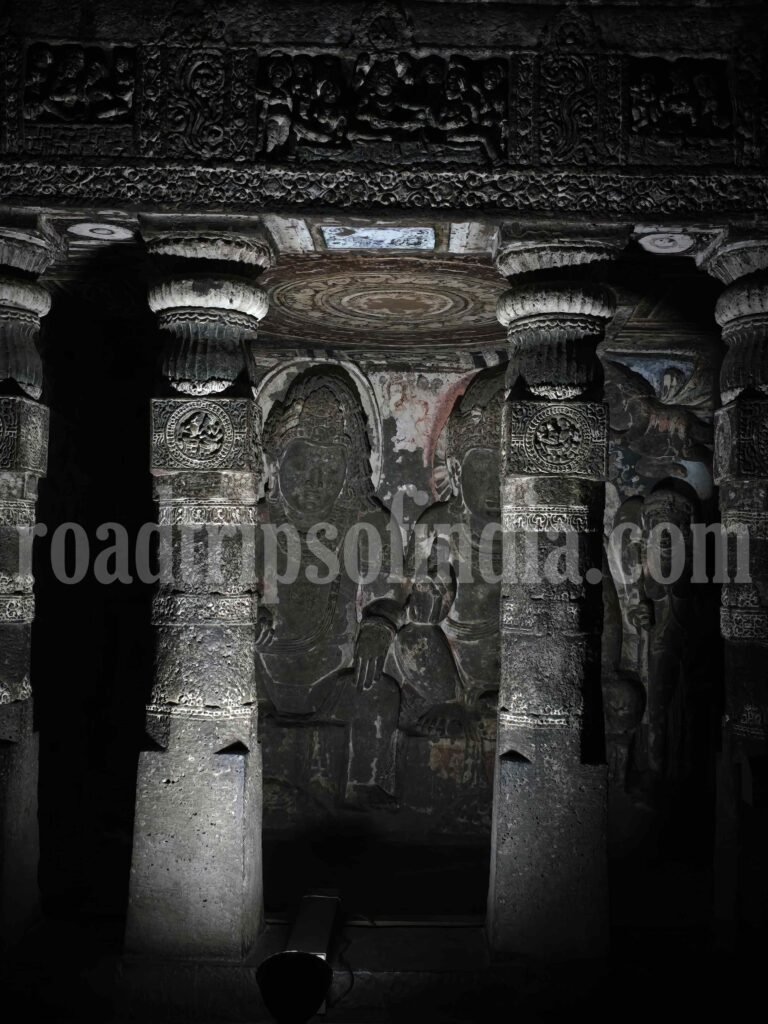
Take pictures, sure — but also put your phone down at least once and just stand quietly.
Let the walls speak first.
Practical Tips (From Someone Who Actually Walked It)
This part is important — and I wish someone had told me all of this clearly:
1) You will need to remove your shoes more than once
Some areas require barefoot entry to protect the floors and murals.
Wear footwear that slips on and off easily.
2) Wear comfortable walking shoes
The pathways:
- Have uneven stone
- Include many steps
- Can be slippery in monsoon
Your feet deserve kindness.
3) Carry a water bottle
You’ll need it. There’s walking and sun and very little shade between caves.
4) Carry an umbrella or cap
Sun + stone surface = heat that rises back at you.
5) Wear light, breathable clothing
Cotton is your friend. Tight jeans are not.
Final Thoughts
The Ajanta Caves in Maharashtra don’t overwhelm you. They don’t try to impress you. They don’t demand awe.
Just simply invite you to slow down.
To look.
To breathe, remember that silence has its own language.
If you let it, Ajanta doesn’t just show you history —
it gives you a moment with yourself.
And those are rare.
If you want to visit another UNESCO site go check our Hampi Blog
To know us more follow us on roadtripsofindia
Related posts:
 Malaysia Batu Caves Travel Guide: The Ultimate Experience & Everything You Need to Know
 Colombo National Museum Ultimate Guide – How to Explore, What You Feel, Everything You Need to Know Before You Go
 Chittorgarh Fort Rajasthan: Everything You Need to Know (2025 Complete Guide)
 Things to Do in Amritsar: A Complete 2025 Travel Guide