
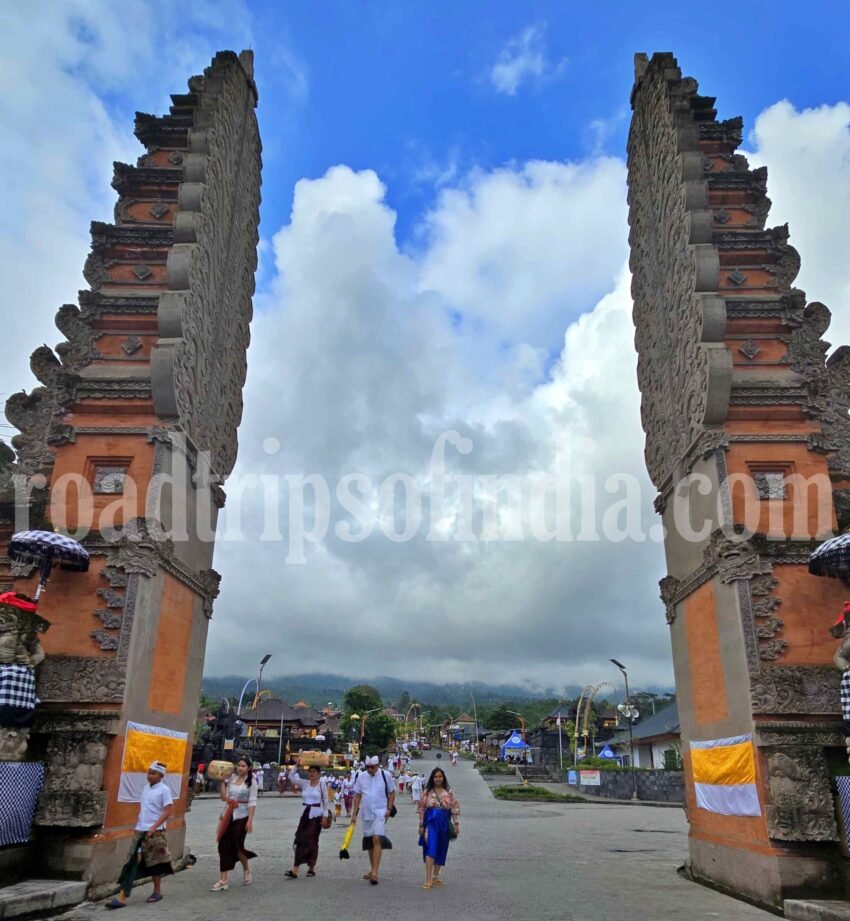
Besakih Temple Bali Indonesia travel story from an Indian blogger – history, emotions, tips, timings, how to reach, and honest experiences.
Introduction – A personal moment that stayed with me
Honestly, I did not plan Besakih Temple properly. It was not on my “must-do” Bali list. I was tired after days of beaches, cafés, and traffic in South Bali. However, one early morning, while sipping coffee in Ubud, someone casually said, “If you want to feel Bali, go to Besakih.”
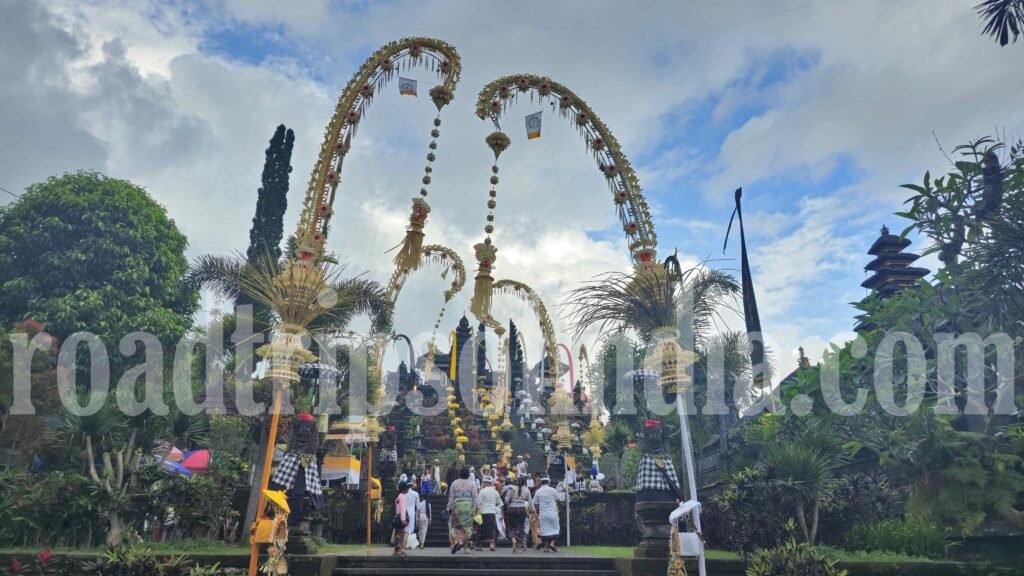
So, meanwhile fighting sleep, I booked a car and started the long drive. Clouds were heavy, Mount Agung was hiding, and I kept wondering if this trip was even worth it. But the moment I stepped into Besakih Temple Bali Indonesia, something inside me slowed down. Not excitement. Not thrill. Just silence. That kind of silence that stays with you long after the trip ends.
Why Besakih Temple Bali Indonesia place is worth visiting
Besakih Temple Bali Indonesia is not just another temple. It feels like the spiritual backbone of the island. Unlike Tanah Lot or Uluwatu, there is no dramatic sunset show here. However, there is depth.
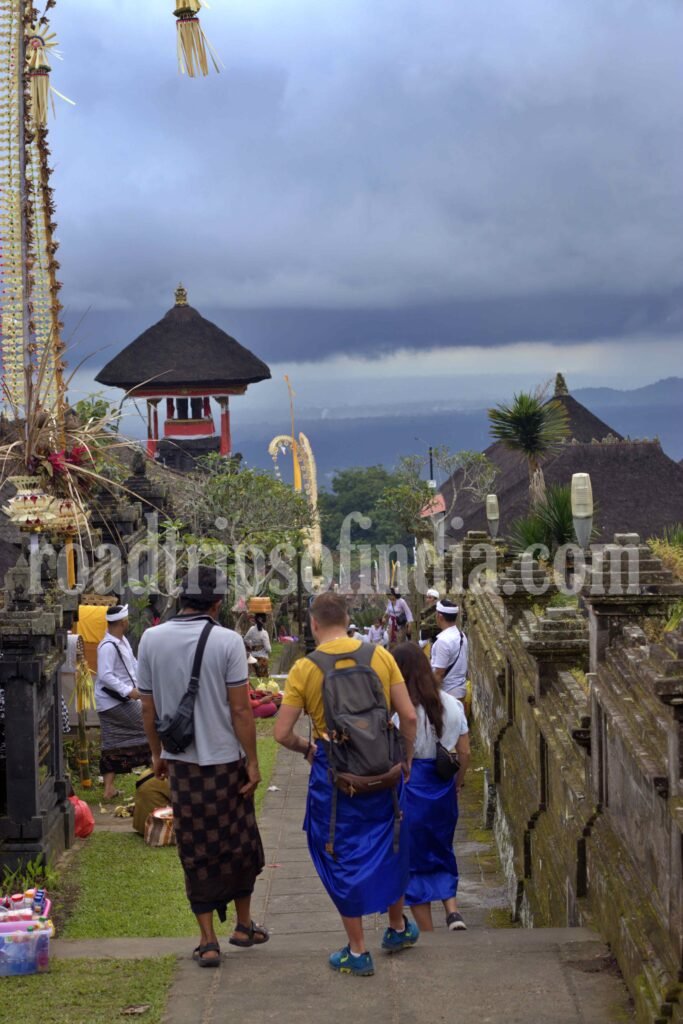
This place makes you pause. You see locals walking barefoot, carrying offerings, climbing steps without complaint. Meanwhile, tourists suddenly stop talking loudly. The mountain air, the chants, and the smell of incense slowly take over.
If you want Instagram shots only, honestly, you may feel bored. But if you want to understand Bali beyond beaches, Besakih Temple Bali Indonesia is worth every minute.
History & background for Besakih Temple Bali Indonesia
Long before Bali became a tourist dream, Besakih already existed. People say this temple complex is more than 1,000 years old. Some even believe it dates back to the 8th century.
The story goes that a Javanese sage, Rsi Markandeya, came here during his spiritual journey. He chose the slopes of Mount Agung because he felt powerful energy there. Slowly, shrines were built. Over centuries, kings added temples, priests added rituals, and villagers protected it like their own child.
Interestingly, when Mount Agung erupted violently in 1963, lava flowed around the temple but did not destroy it. Locals believe it was divine protection. Standing there, hearing this story, you start believing too.
Architecture & natural beauty
Besakih Temple Bali Indonesia is not one temple. It is a massive complex of more than 80 temples. The main one is Pura Penataran Agung.
Stone steps lead you upward, symbolising spiritual progress. The meru towers with multiple roofs rise into the sky, perfectly aligned with Mount Agung behind them. Meanwhile, clouds play hide and seek.
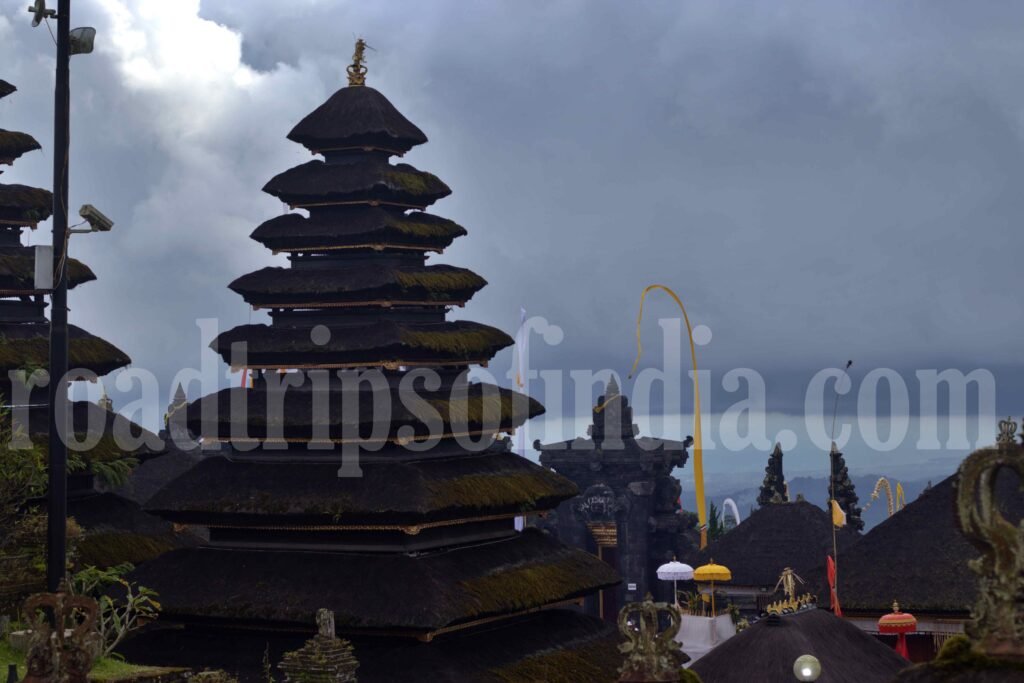
The architecture is simple yet powerful. No gold, no marble. Just stone, moss, carvings, and time. Honestly, nature completes what humans started here. Green hills, cool breeze, and mountain silence make the place feel alive.
Step-by-step visitor experience
First, you enter through a large gate. Immediately, locals approach you for sarongs and guides. Then, you climb. Slowly.
You hear bells. You smell incense. Meanwhile, priests pass by without looking at you. You watch ceremonies you don’t fully understand, yet they feel familiar somehow.
As you walk further, the crowd reduces. You start noticing small details – cracked steps, old statues, flower offerings half-wet from rain. By the time you reach the upper levels, your legs hurt, but your mind feels lighter.
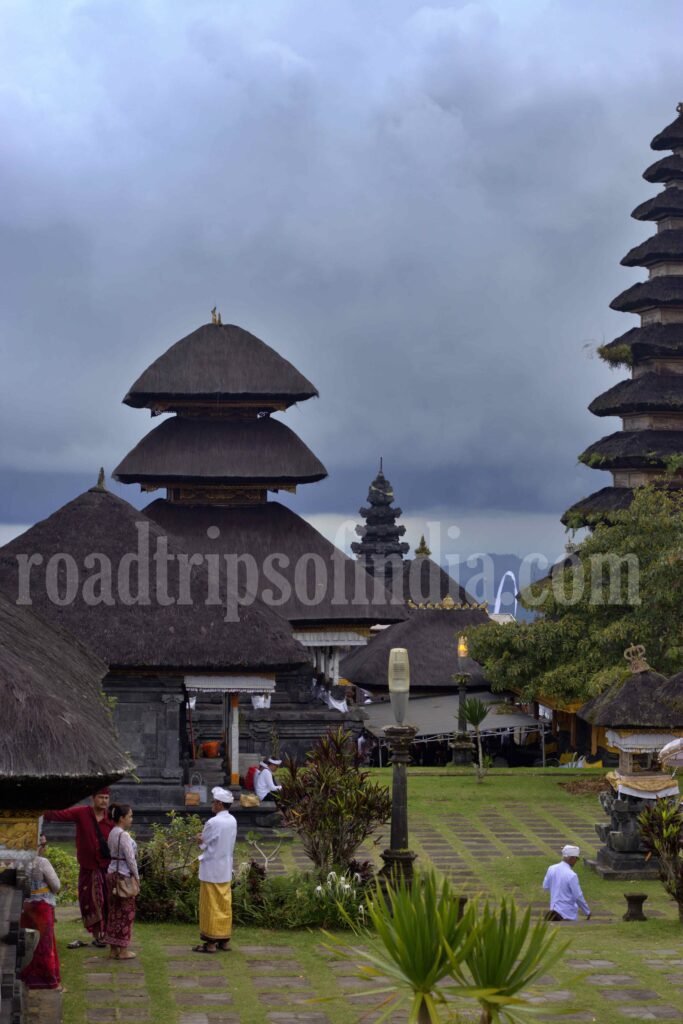
Honestly, it is not about finishing the walk. It is about being present while doing it.
How it was earlier vs how it is now
Earlier, Besakih Temple Bali Indonesia was mostly visited by locals and pilgrims. Roads were narrow, facilities minimal, and tourists rare.
Now, it is more organised. Parking is structured, sarongs are compulsory, and guides are available everywhere. However, commercialization has also entered. Some people feel harassed by unofficial guides. Meanwhile, prices near the temple have increased.
Still, despite changes, the soul of the place remains untouched. If you go early and avoid peak hours, you can still feel the old Besakih.
Things people usually miss in Besakih Temple Bali Indonesia
Many visitors rush only to the main temple and leave. That’s a mistake.
Behind the main area, smaller temples are quieter and more peaceful. Also, people miss looking back. Turn around and see Mount Agung when clouds clear. That view is unforgettable.
Another thing people miss is observing locals. Watch how they pray, how they sit, how patiently they wait. That teaches more than any guide.
Practical tips nobody tells you
- Go early, before 9 am. Crowds arrive later.
- Hire a car for flexibility; public transport is unreliable.
- Politely say no to aggressive guides; official ones wear IDs.
- Wear comfortable shoes; steps are uneven.
- Carry cash for parking and small donations.
- If it rains, wait. Clouds clear suddenly here.
Honestly, patience makes this visit better.
Best time to visit
April to October is ideal. Weather is dry, skies are clearer, and Mount Agung is often visible.
Meanwhile, avoid visiting during major Balinese festivals unless you are okay with crowds. Early mornings are best. Late afternoons can be misty and cold.
Timings & tickets
- Timings: Usually 8:00 AM to 6:00 PM
- Entry fee: Around IDR 60,000 – 100,000 (includes sarong)
- Guide: Optional, but official guides charge extra
Prices can change, so carry extra cash.
How to reach Besakih Temple Bali Indonesia
From Ubud, it takes about 1.5 to 2 hours by car. From Kuta or Seminyak, around 2.5 hours.
Most people hire a private taxi or scooter. However, roads are hilly, so driving requires confidence. Honestly, a car with driver is safer.
Planning trip from India
Visa
Indians get Visa on Arrival for Indonesia. It is valid for 30 days and can be extended once. Carry passport with 6-month validity.
Flights
Direct flights are available from Delhi, Mumbai, and Bengaluru to Denpasar. Otherwise, one-stop flights via Singapore or Kuala Lumpur are common.
Currency
Indonesian Rupiah is used. Exchange some money in India, but Bali also has exchange counters. Use cards in cities, cash near temples.
SIM
Buy a local SIM at the airport. It’s easy and saves trouble. Internet helps with maps in remote areas.
Food
Indian food is available in Ubud and Kuta. However, near Besakih, options are limited. Eat beforehand.
Mistakes to avoid
- Don’t dress casually; respect temple rules
- Don’t rush the visit
- Don’t argue with locals
You can easily plan a full-day trip around Besakih Temple Bali Indonesia.
Map location
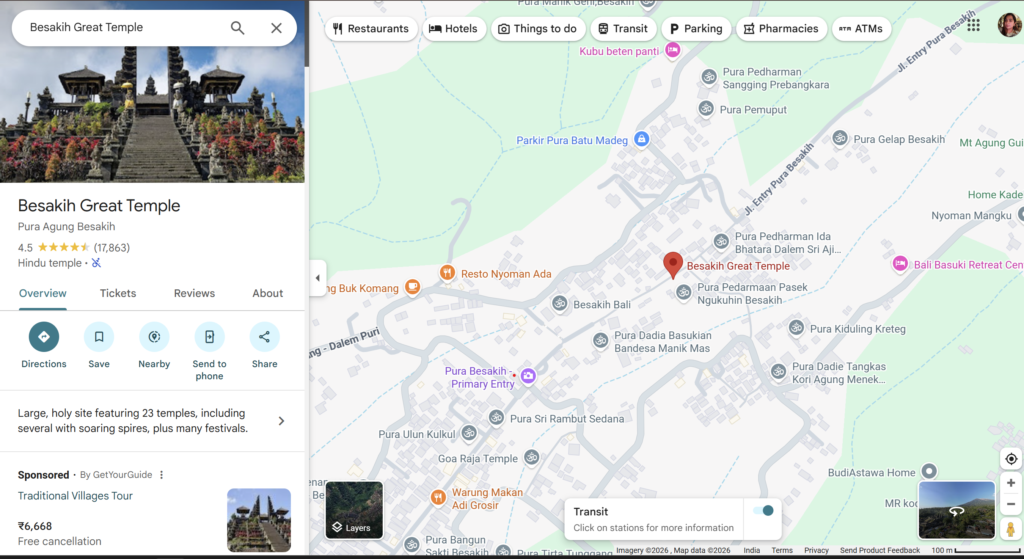
Besakih Temple Bali Indonesia is located on the slopes of Mount Agung in East Bali, Karangasem Regency. Google Maps works well, but network may fluctuate.
FAQs
Q1. Is Besakih Temple Bali Indonesia crowded?
Yes, but early mornings are peaceful.
Q2. Can women visit during periods?
No, temple rules restrict entry.
Q3. Is a guide compulsory?
No, but an official guide helps understand rituals.
Q4. Is it suitable with kids?
Yes, but lots of walking is involved.
Conclusion
When I left Besakih Temple Bali Indonesia, I didn’t feel excited or tired. I felt grounded. As if something ancient quietly reminded me to slow down.
Beaches fade, photos blur, cafés close. But moments like these stay. You may forget dates, timings, and costs. However, you won’t forget the feeling of standing silently under Mount Agung, listening to bells, feeling small yet complete.
If Bali has a heartbeat, for me, it beats strongest at Besakih.
Related posts:
 Ammapalli Temple Shamshabad – Ultimate Travel Guide with Everything You Need to Know Before You Go
 Gangaramaya Temple Ultimate Guide – Everything You Need to Know Before Visiting Colombo’s Most Peaceful Place
 Kali Mandir Shamshabad Ultimate Guide – How to Visit, What You Feel, Everything You Need to Know Before You Go
 How to Visit Botanical Garden Hyderabad – Simple Guide for First Time Visitors
[…] Temple – https://roadtripsofindia.com/besakih-temple-bali-indonesia-ultimate-guide-on-how-to-visit-everything…. Each place has a different feeling, and I’ve written honestly so you can plan better, not just […]
[…] Temple – https://roadtripsofindia.com/besakih-temple-bali-indonesia-ultimate-guide-on-how-to-visit-everything…. Each place has a different feeling, and I’ve written honestly so you can plan better, not just […]