
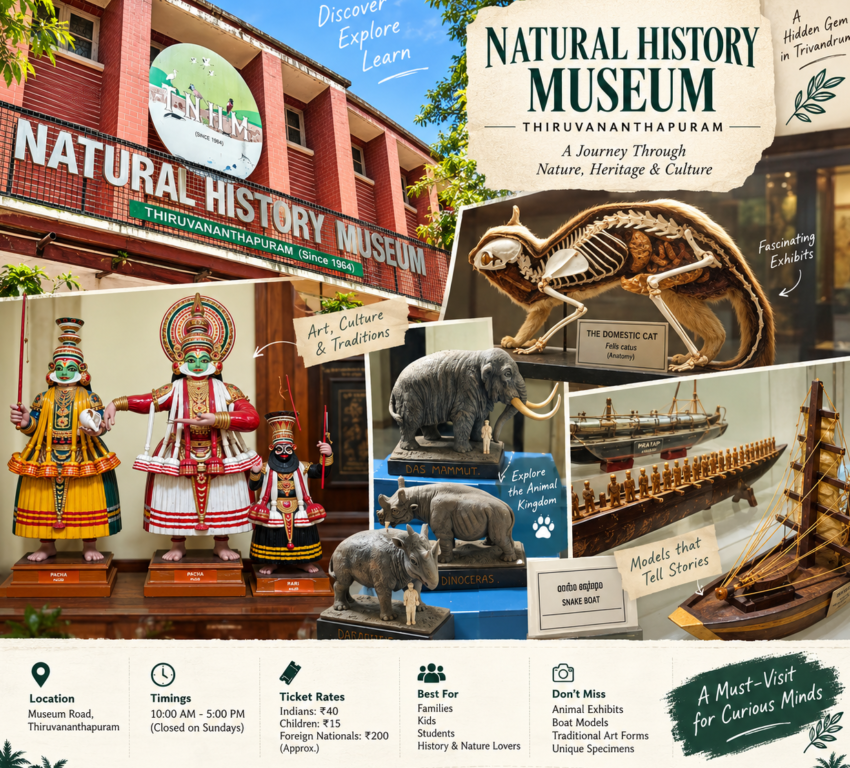
The Natural History Museum in Thiruvananthapuram is a brilliant stop for curious children and adults. It is inside the Museum and Zoo complex, close to Napier Museum. You can see specimens, skeletons, fossils, birds, models, and displays that make science feel far less like a school chapter.
The museum has been open since 1964. It brings together animals, birds, human anatomy, rocks, fossils, and Kerala’s natural world under one roof. It is old-school in parts, but that is part of the charm.
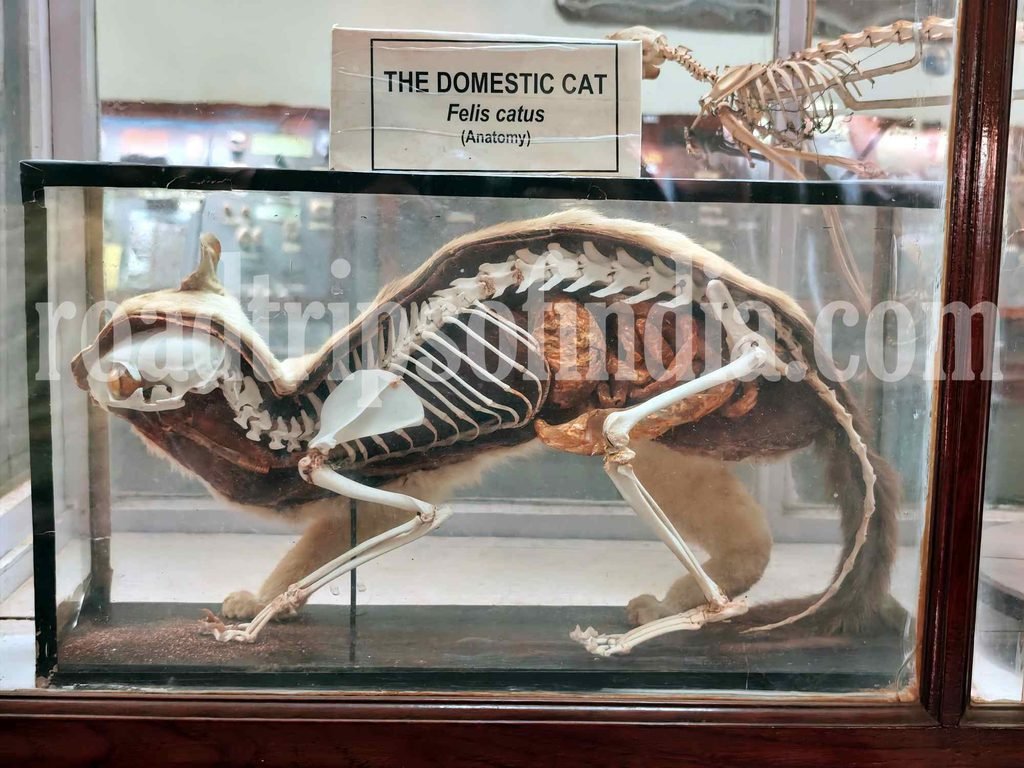
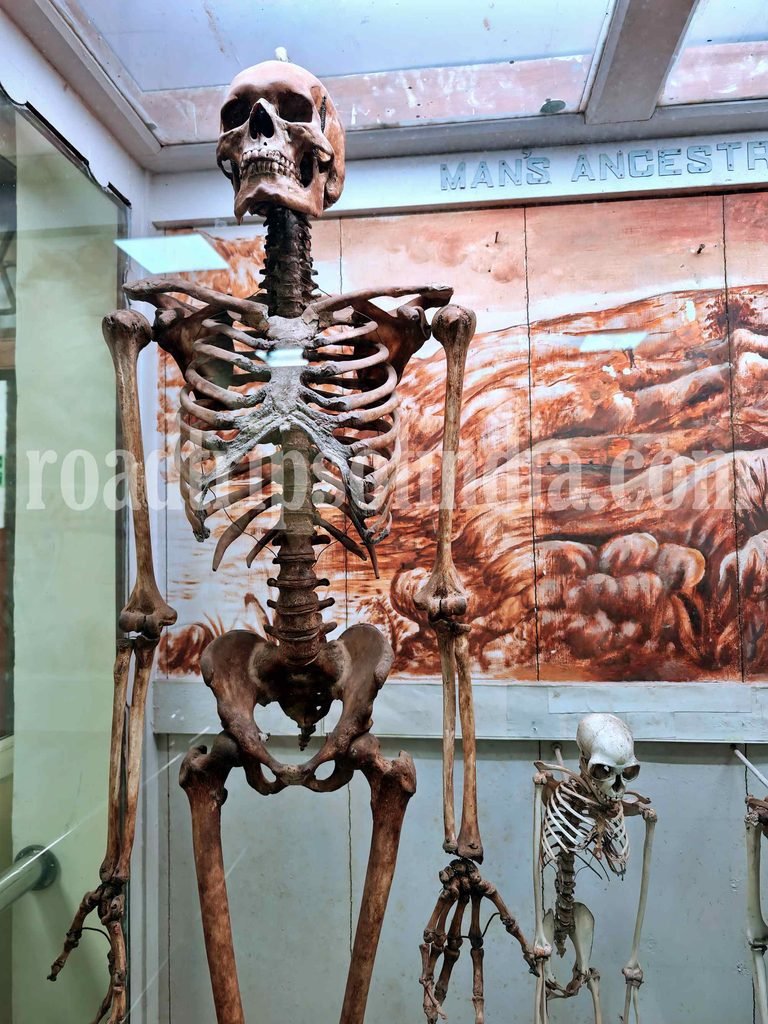
The photos from this visit show a domestic cat anatomy display, a human skeleton, many labelled birds of prey, a catamaran model, and colourful Kathakali figures. This is not a museum you finish in ten rushed minutes. Slow down, read the labels, and let the children ask unusual questions. Museums are built for that.
Natural History Museum Distance & Travel Time
The Natural History Museum is in Nanthancodu, Thiruvananthapuram. It is part of the larger Napier Museum and Zoo area.
From Hi-Tech City, Hyderabad, the driving distance is roughly 730–760 km. The journey can take 13–16 hours without long breaks.
A practical Hyderabad to Thiruvananthapuram road trip route is:
- Hi-Tech City → Outer Ring Road (ORR) → NH 44
- Continue via Kurnool and Bengaluru
- Take the Bengaluru–Salem highway corridor
- Drive through Coimbatore and Tirunelveli
- Reach Thiruvananthapuram and follow signs for Museum Junction
The highways are usually good. However, Bengaluru traffic and city traffic near Trivandrum can add time. Break the trip near Bengaluru or Coimbatore if you are travelling with children.
The museum is around 3 km from Thiruvananthapuram Central railway station. It is also about 7–10 km from Thiruvananthapuram International Airport, depending on your route.
A Short History of Natural History Museum
The Thiruvananthapuram Natural History Museum was established in 1964. It was created as a separate home for collections that were earlier displayed in the Art Museum’s eastern gallery.
The official museum website describes it as one of India’s more comprehensive natural-history collections. Its exhibits explain the animal kingdom, from tiny creatures to whales.
The museum also holds an important bird-specimen repository. The collection includes material associated with noted naturalists and ornithologists, including H. S. Ferguson and Salim Ali.
It is an educational museum first. Yet the displays still feel interesting for regular travellers. You do not need a biology degree. A basic sense of wonder is enough.
Natural History Museum Timings and Holidays
The official museum brochure lists these usual timings:
- Tuesday to Sunday: 10:00 AM to 4:30 PM
- Wednesday: 1:00 PM to 4:30 PM
- Monday: closed
- Other listed holidays: Republic Day, Independence Day, Thiruvonam, and Mahanavami
Visit early on a non-Wednesday if you want enough time for the museum, zoo, and Napier Museum.
Timings can change for maintenance or official events. Confirm before leaving through the official Natural History Museum page.
Natural History Museum Ticket Price
The entry board photographed during this visit shows the following rates:
- Indian adults above 12 years: ₹40
- Children aged 5–12 years: ₹15
- Family ticket for two adults and two children below 12: ₹90
- Higher-secondary or college group ticket: ₹300
- School group ticket: ₹200
- Foreign adults: ₹200
- Foreign children aged 5–12 years: ₹100
- Children below 15 years: free entry on Sundays
Ticket amounts can change. Check the current board at the entrance before buying tickets.
The museum is still a low-cost family outing. It gives you a lot more than a quick air-conditioned break from the Kerala sun.
What You Will See Inside Natural History Museum
Skeletons and anatomy displays
The museum has a clear anatomy section. The domestic cat display is especially useful because it shows the skeleton inside the preserved body.
There is also a tall human skeleton display with smaller skeletons beside it. These exhibits help children see how bones shape different bodies.
The displays are best for older children who are ready for basic anatomy. Younger children may find them surprising, so prepare them before entering.
Birds of prey gallery
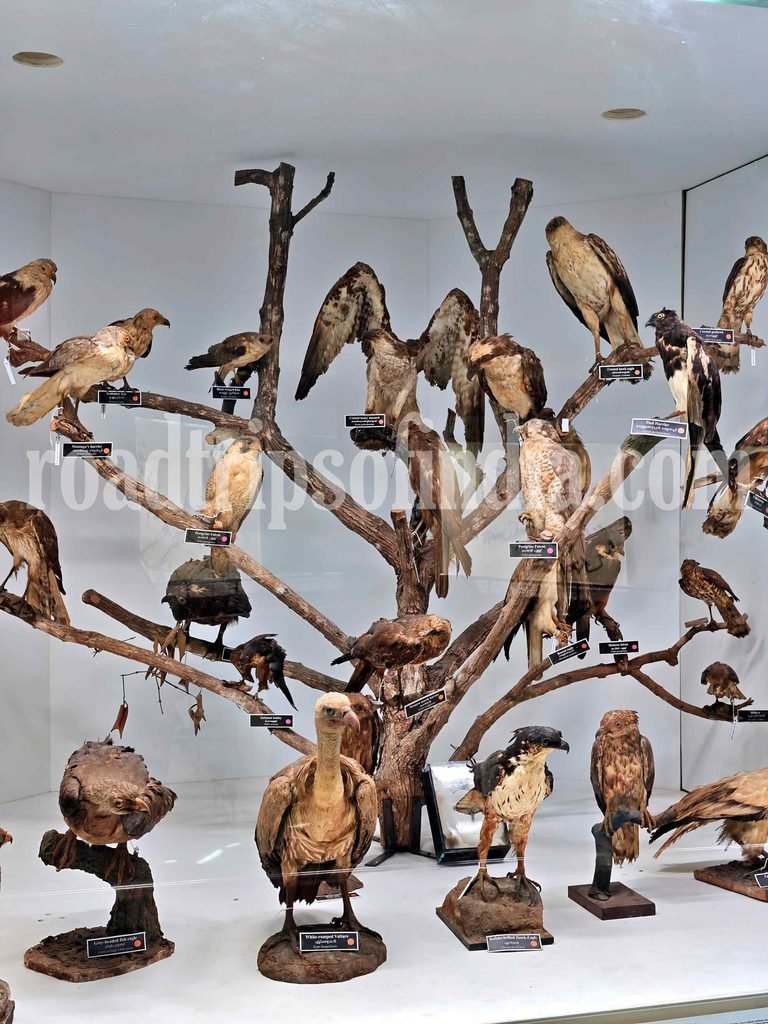
One striking case displays many preserved raptors. The labels identify several birds of prey, including eagles, harriers, falcons, and kites.
The gallery is a useful reminder that Kerala’s natural world is not only about elephants and tigers. Birds of prey play a key role in healthy ecosystems too.
Spend time comparing beaks, claws, wings, and body sizes. It turns into an easy family game.
Fossils, animals, and prehistoric life
The official collection starts near the entrance with fossilised tree trunks that are said to be around 20 million years old. The museum also has geological specimens and a large range of animal exhibits.
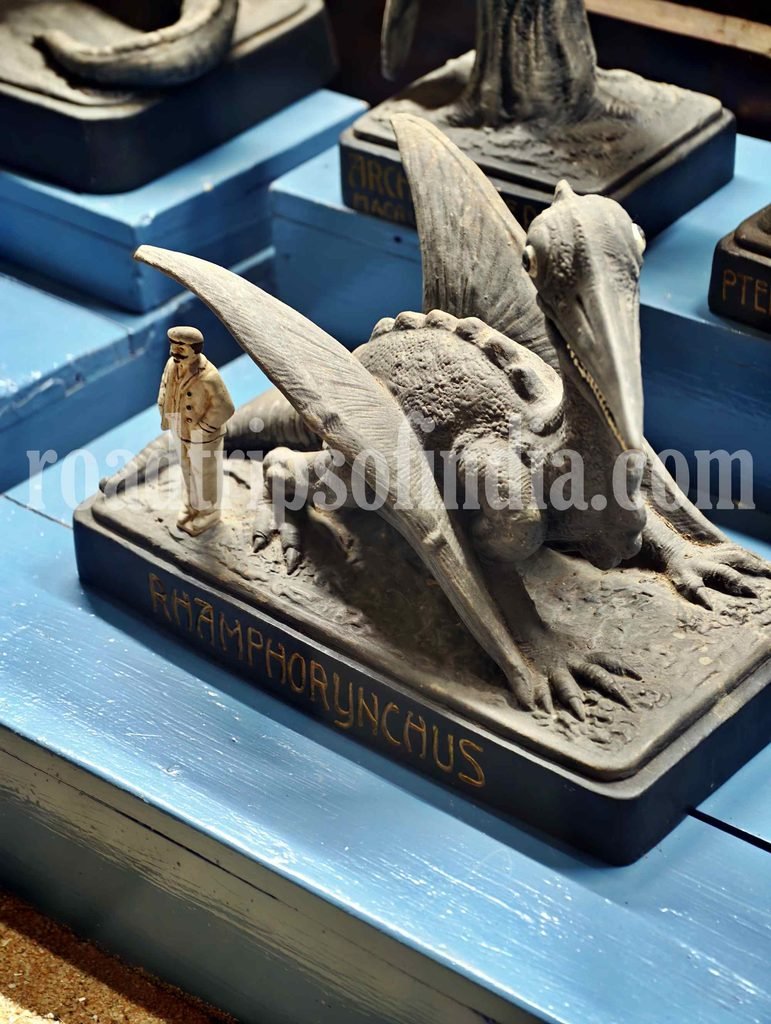
One photograph shows a model of Rhamphorhynchus, an extinct flying reptile. It is a good visual hook for children who enjoy dinosaurs and prehistoric creatures.
Look out for mammal displays, reptiles, fish, amphibians, and invertebrates. The museum also has an important whale shark cast and an estuarine crocodile display.
Kerala’s sea and culture connections
A catamaran model appears among the displays. It is a simple but lovely reminder of Kerala’s long relationship with water, fishing, and coastal life.
The museum also includes colourful figures inspired by Kerala’s performance traditions. These make the visit feel connected to the region, not just a generic science gallery.
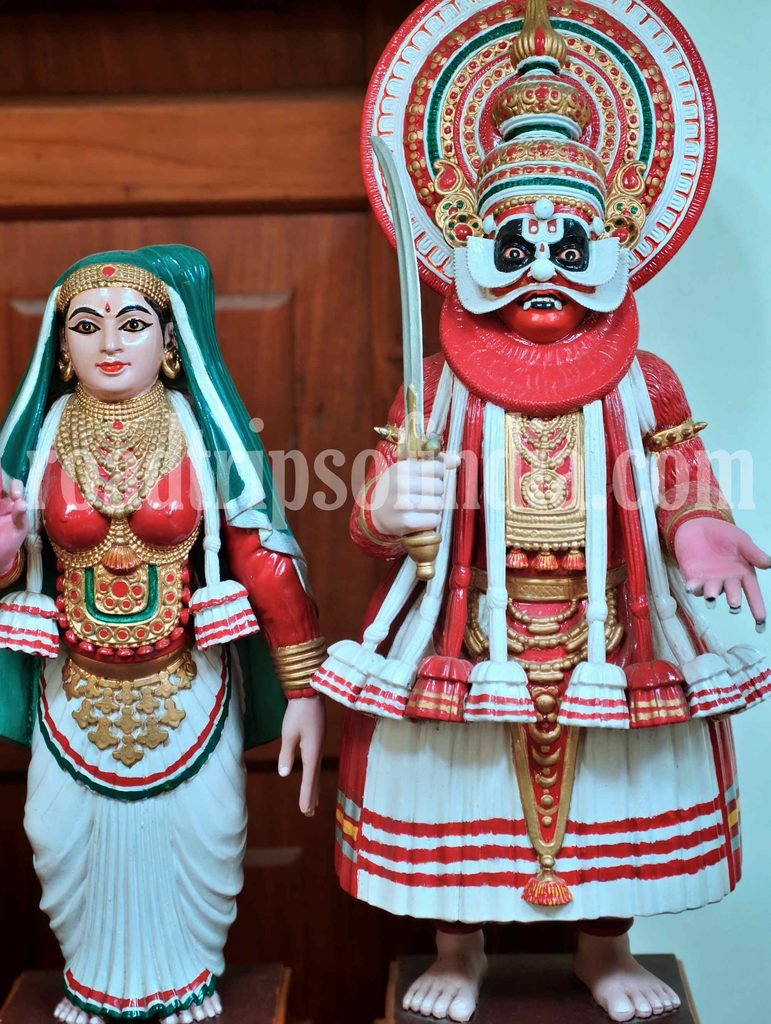
The mix may seem unexpected. That is what makes this place fun. You can move from anatomy to birds, boats, fossils, and cultural models in one visit.
7 Easy Tips for Visiting Natural History Museum
1. Start with the museum before the zoo
The indoor galleries are easiest when your group still has energy. Visit Natural History Museum first. Then move to the zoo after a snack or lunch.
2. Keep at least one hour aside
Plan 60–90 minutes for the museum. Add more time if your children enjoy labels, specimens, and science facts.
The museum rewards curiosity. A rushed visit will miss its best bits.
3. Prepare young children for preserved specimens
Some animal and skeleton displays may be new for younger visitors. Explain that museums use these exhibits to teach people about animals and conservation.
This small chat avoids a surprise at the first glass case.
4. Photograph the exterior and signboard
The bright museum sign and leafy entrance lane make useful travel photos. The approach road in the photos looks shaded by mature trees, but there are parked cars along it.
Use a cab if parking feels tight. Families may find that simpler than circling the compound.
5. Read the labels together
The raptor gallery and cat anatomy display are much more meaningful with labels. Let your child choose one animal and share one fact.
It is a low-pressure way to make the museum interactive.
6. Pair it with Napier Museum
Napier Museum is close by and makes a great heritage-and-science combination. Visit one before lunch and the other after lunch.
Read our Napier Museum visitor guide for timings, tickets, and must-see displays.
7. Do not skip the outdoor museum compound
The gardens and paths around the complex are pleasant for a short break. The photos show a green, shaded setting around the museum buildings.
Carry water, especially from March to May. A small umbrella also helps during monsoon months.
Best Time to Visit Natural History Museum
October to March is best for comfortable city sightseeing. It is warm, but the mornings are easier for walking around the museum complex.
June to September brings monsoon showers. The gardens look greener, but keep an umbrella handy.
April and May can be humid. Start at opening time and plan indoor stops around the hottest part of the day.
Weekday mornings are usually calmer. Sundays may feel busier because children below 15 get free entry.
How to Reach Natural History Museum
By road
Museum Junction and Vellayambalam are the easiest map points. From most city areas, a taxi, app-based cab, or auto is convenient.
The photos suggest the internal approach road can have cars parked along it. Use a cab if you do not want to worry about parking.
By train
Thiruvananthapuram Central is the nearest major station. Take an auto or taxi to Museum Junction.
The journey is short. Still, allow extra time during weekday traffic.
By flight
Thiruvananthapuram International Airport is the closest airport. A prepaid taxi or app cab is easiest for families with luggage.
Flights from Hyderabad usually make more sense than a long road trip for a short break.
By bus
Thampanoor bus stand is close to the museum area. From there, use a local bus, auto, or cab to Museum Junction.
A Simple Two-Day Thiruvananthapuram Itinerary
- Day 1 morning: Visit Natural History Museum at opening time.
- Day 1 late morning: Explore Thiruvananthapuram Zoo.
- again same day afternoon: Have lunch around Vellayambalam or Palayam.
- Day 1 evening: Walk around Kanakakunnu Palace.
- Day 2 morning: Visit Napier Museum and Sree Chitra Art Gallery.
- 2 afternoon: Explore the temple area using our Padmanabhaswamy Temple travel guide.
- Day 2 evening: Head to Shanghumugham, Veli, or Kovalam for sunset.
Food Stops and Hotels Nearby
Vellayambalam, Palayam, Kowdiar, and Vazhuthacaud have plenty of food choices. Look for Kerala meals, appam and stew, puttu and kadala curry, bakeries, and cafés.
Budget stays are easiest around Thampanoor and Palayam. Mid-range hotels near Vellayambalam and Vazhuthacaud are convenient for sightseeing. Luxury travellers can choose Kowdiar city hotels or extend the trip to Kovalam beach resorts.
Estimated Cost for a Family Visit
- Natural History Museum family ticket: ₹90, based on the photographed entry board
- Local taxi or auto rides: ₹200–₹1,500, based on distance and duration
- Lunch for a family: ₹800–₹2,000
- Hotel room: ₹1,500–₹7,000 per night, depending on category
- Zoo and Napier Museum tickets: separate charges apply
For a Hyderabad self-drive trip, fuel and tolls will be the major costs. A return drive can cost roughly ₹11,000–₹19,000, depending on your vehicle and route.
FAQs About Natural History Museum
What is Natural History Museum Thiruvananthapuram famous for?
Natural History Museum is known for its broad science and wildlife collection. Visitors can see skeletons, fossils, birds, mammals, reptiles, geological objects, and natural-history exhibits. Its bird collection and educational animal displays make it especially useful for families and students.
What are Natural History Museum timings?
Natural History Museum is generally open Tuesday to Sunday from 10:00 AM to 4:30 PM. Wednesday opening is usually at 1:00 PM. It is closed on Mondays and selected public holidays. Confirm official timings before your visit.
What is the Natural History Museum ticket price?
The entry board photographed for this guide lists ₹40 for Indian adults, ₹15 for children aged 5–12, and ₹90 for a family ticket. Foreign adult tickets are listed at ₹200. Check the current entry board because prices can change.
Is Natural History Museum suitable for children?
Yes. Children who enjoy animals, birds, fossils, and science will enjoy it. The anatomy and preserved-specimen displays are better introduced gently to younger children. Combining the museum with the zoo makes a full, family-friendly day.
How much time is needed for Natural History Museum?
Keep one to one-and-a-half hours aside. Give yourself extra time if you want to read labels or visit with children. You can easily add Napier Museum, the zoo, or Kanakakunnu Palace to the same itinerary.
What can I combine with Natural History Museum?
Natural History Museum is near Napier Museum, Thiruvananthapuram Zoo, Sree Chitra Art Gallery, and Kanakakunnu Palace. It is one of the easiest places in Trivandrum to build into a half-day cultural and family outing.
Continue Your Thiruvananthapuram Trip
After exploring the Natural History Museum, enjoy the green heritage setting at Kanakakunnu Palace. Families can then plan a longer day with the nearby Thiruvananthapuram Zoo.
For a meaningful city experience, read our Padmanabhaswamy Temple travel guide. If you have more time, head towards the coast with our Azhimala Shiva Temple guide.
Varkala is another lovely extension for this Kerala trip. Save our Cafe Trip Is Life Varkala food guide for a relaxed meal between beach walks and sightseeing.
Final Thoughts
Natural History Museum is a thoughtful, affordable, and family-friendly stop in Thiruvananthapuram. It turns a city day into something more curious.
Come for the birds, skeletons, fossils, and science displays. Stay for the unexpected mix of Kerala culture, coastal models, wildlife learning, and quiet museum atmosphere.
Also, you can checkout our instagram profile: https://instagram.com/roadtrips_of_india/
Related posts:
 Thiruvananthapuram Zoo Ultimate Guide: Family Tips, Timings & Everything you need to Know
 Napier Museum Trivandrum: Everything You Need to Know Before Visiting
 Kanakakunnu Palace: The Best Heritage Place to Visit in Trivandrum
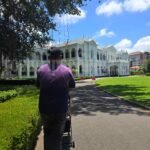 Colombo National Museum Ultimate Guide – How to Explore, What You Feel, Everything You Need to Know Before You Go