
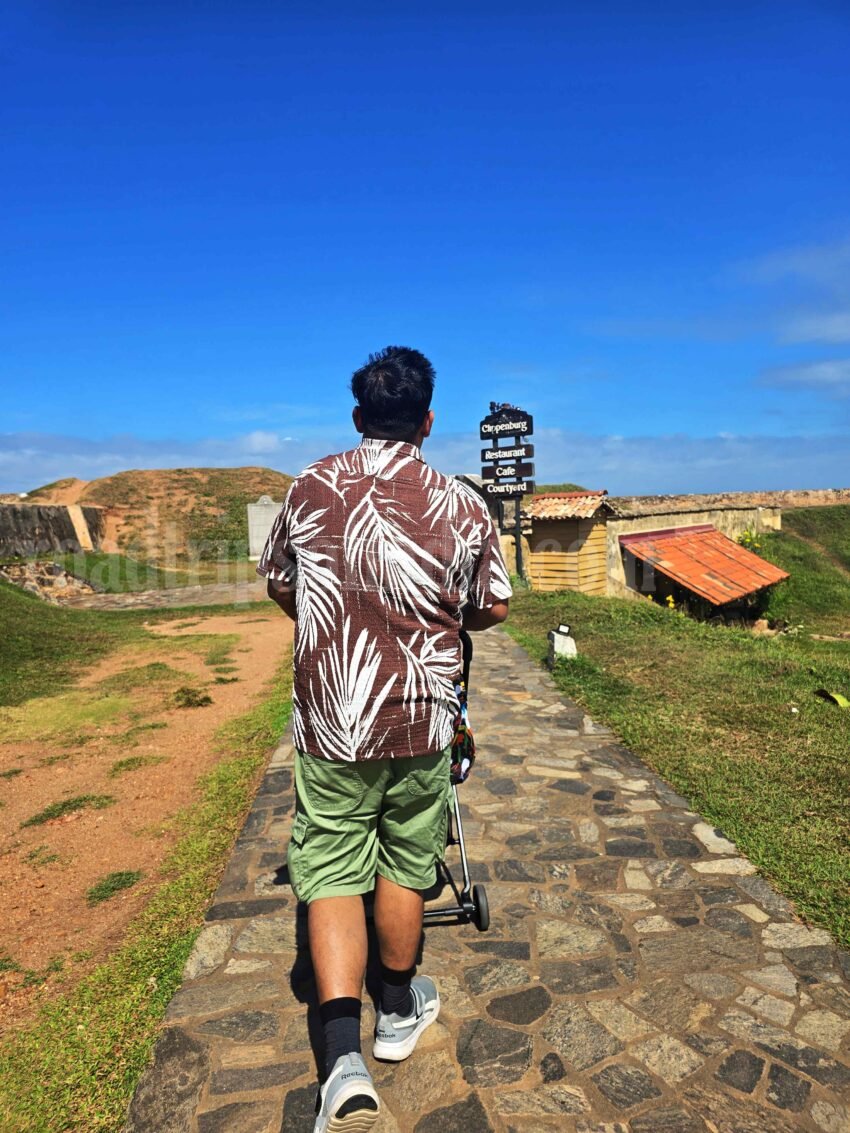
Galle Dutch Fort Sri Lanka guide with history, tips, best time, how to reach, things to do and planning your Sri Lanka trip from India.
Galle Dutch Fort Sri Lanka – when the ocean meets old stories
The first time I stepped inside Galle Dutch Fort Sri Lanka, I forgot that I was in a foreign country. Somehow, it felt familiar. Cobbled roads, white houses, small cafés, old churches, and the sound of waves crashing against thick stone walls. Everything around me was calm, but alive.
Galle is not a place you rush through. You walk slowly here, stop often. And suddenly, time feels different.
Why Galle Dutch Fort Sri Lanka is worth visiting
Many people visit beaches in Sri Lanka. However, Galle Dutch Fort Sri Lanka gives you both sea and history in one place.
You walk inside a fort built hundreds of years ago. At the same time, you hear waves roaring below your feet. Meanwhile, local kids play cricket on the ramparts, cafés sell iced coffee, and artists paint on the roadside.
This mix is rare. You don’t feel like you are in a museum. You feel like you are walking inside a living story.
History of Galle Dutch Fort Sri Lanka – from war walls to peaceful walks
The fort was first built by the Portuguese in the 16th century. Later, the Dutch captured it and made it stronger. That is why it is called Galle Dutch Fort Sri Lanka.
They built thick walls to protect the harbour from enemies and storms. Over time, British people also lived here and added buildings.

Slowly, wars ended. Guns disappeared. And the fort became a home for artists, shopkeepers, café owners and families.
Now, when you walk here, you don’t feel fear. You feel comfort.
Architecture of Galle Dutch Fort Sri Lanka – strong but gentle
The walls are massive. Stone blocks are huge. Yet, everything feels soft.
Narrow lanes lead to wide open courtyards. Old houses sit next to modern cafés. Churches stand close to mosques and temples.
Some buildings are cracked. Paint is peeling. However, this is not ugliness. It is character.
Step-by-step visitor experience at Galle Dutch Fort Sri Lanka
First, you enter through the main gate. Suddenly, traffic disappears.
You walk past souvenir shops. Then you see lighthouse. Then you reach ramparts.
You stop. You stare at the sea. Wind hits your face hard. You forget your phone.
Then you walk deeper. You see bookshops, old Dutch houses. You hear foreign languages and Sinhala words mixing.
Slowly, your steps become slower than your thoughts.
Things people usually miss inside Fort
Many people miss the small museum rooms hidden inside buildings.
They skip the old Dutch hospital, which is now a beautiful café zone.
They also ignore the quiet lanes away from lighthouse. Those lanes hold the real soul of Galle Fort Sri Lanka.
Old cannon placeholders that still watch the sea
While walking along the ramparts of Galle Dutch Fort Sri Lanka, we suddenly noticed round stone platforms placed at regular gaps. A local guide told us that these were cannon placeholders. Long ago, heavy cannons were fixed here and could rotate almost 270 degrees. They were not just pointing at the sea, but also towards the land side. Somehow, standing there made me imagine soldiers scanning the horizon again, even though today only tourists stand there with cameras.
Monitor lizard enjoying the weather inside Fort
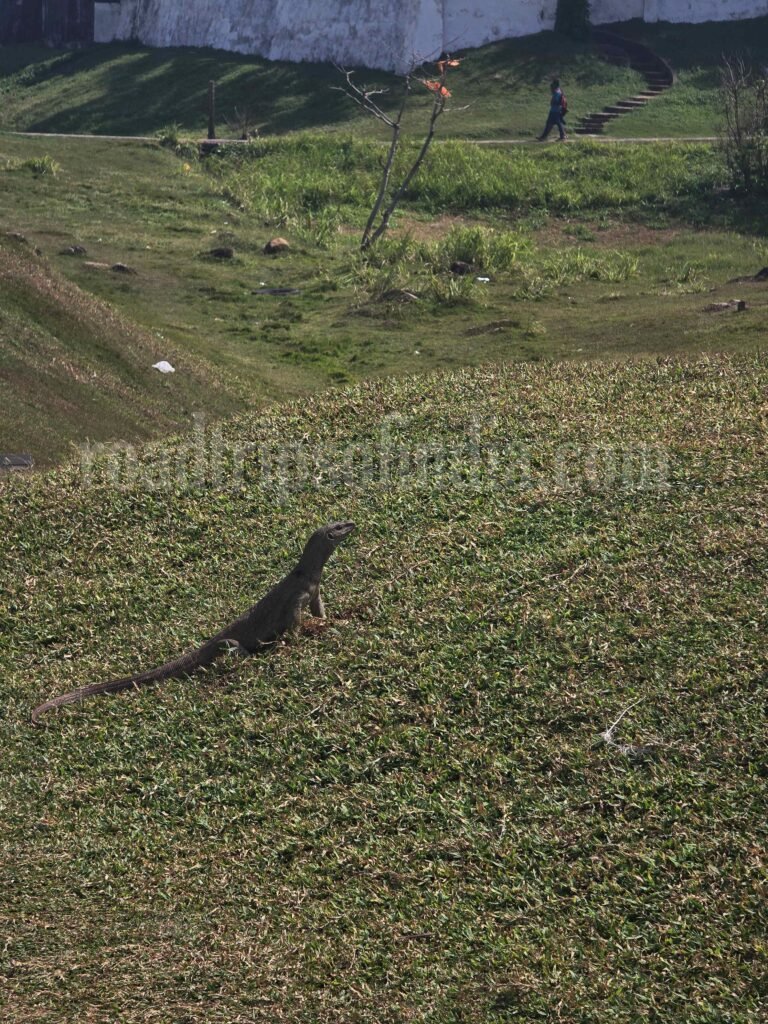
Meanwhile, as we were moving slowly near the walls, something big crossed our path. At first, I froze. Then I realised it was a monitor lizard, walking calmly like it owned the place. It did not fear humans at all. It was just enjoying the sunny weather inside Galle Fort Sri Lanka, reminding us that this fort is not only for people, but also for wildlife.
Galle Clock Tower – the silent timekeeper of Galle Fort
Just outside the main entrance of Galle Dutch Fort Sri Lanka, there stands the Galle Clock Tower. At first, it looks simple, almost forgotten. However, the moment you learn its story, you start looking at it differently.
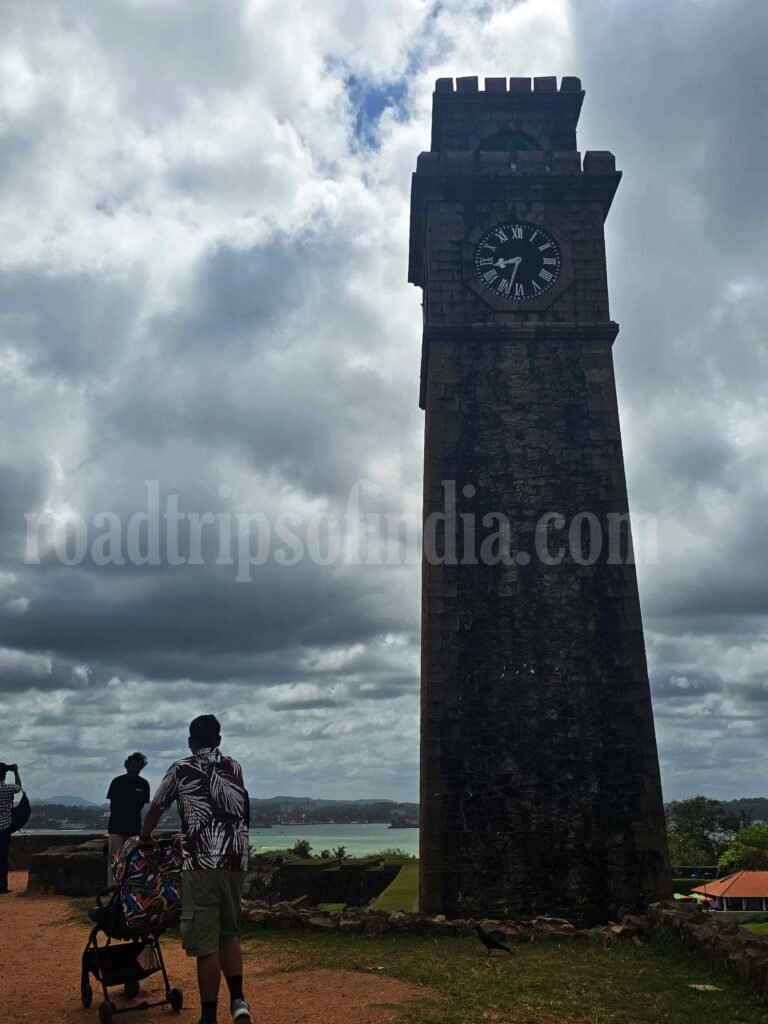
This clock tower was built in 1883, not as a clock at first, but as a memorial to a local doctor named Dr. Peter Daniel Anthonisz. He was deeply respected by the people of Galle. Later, a clock was added to the tower, and since then it has been quietly watching the city change around it.
Today, buses rush past it. Tourists take selfies near it. Still, the clock keeps ticking calmly, as if it is reminding everyone that Galle Fort Sri Lanka is not about speed. It is about slowing down and letting time pass naturally.
Thick fort walls that still feel powerful
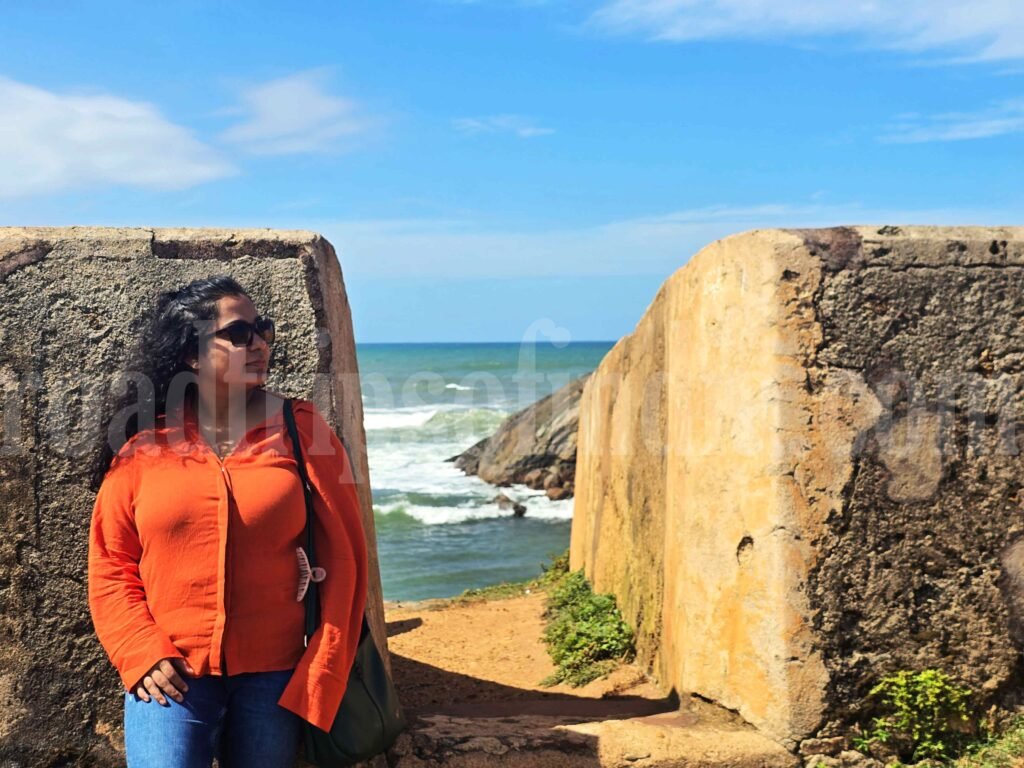
The walls of Galle Dutch Fort Sri Lanka are massive. You touch them and feel the rough stone under your fingers. These walls were built to protect people from storms, enemies and time itself. And somehow, they still stand strong after hundreds of years. Walking on them slowly, you understand why this fort survived everything.
Different structures that live together inside the fort
Inside the fort, there are churches, mosques, colonial houses, museums, cafés and art galleries – all mixed together. However, nothing looks out of place. Everything fits. Somehow, this mix of structures shows how many cultures passed through Galle Fort Sri Lanka and left a small part of themselves behind.
Why Dutch Fort is a UNESCO World Heritage Site
Because of this rare blend of European architecture and South Asian culture, Galle Dutch Fort Sri Lanka is now a UNESCO World Heritage Site. It is not preserved like a dead monument. It is alive. People live here, work here and love here. That is why it still feels warm, not frozen in time.
The strong gates of Galle Dutch Fort Sri Lanka
Finally, the gates of the fort deserve special mention. The Galle Dutch Fort Gates are huge, thick and heavy. When you pass through them, it honestly feels like crossing from one world into another. Outside is traffic and noise. Inside is slow walking, sea breeze and stories waiting to be heard.
The international cricket ground hidden in plain sight
Not far from the fort, you can clearly see the Galle International Cricket Stadium. Honestly, it is not just a ground, it is an emotion for anyone who loves cricket. On one side you see the thick stone walls of Galle Dutch Fort Sri Lanka. On the other side, the deep blue ocean keeps shining. It feels like the stadium is trapped between history and nature, and somehow enjoying both.
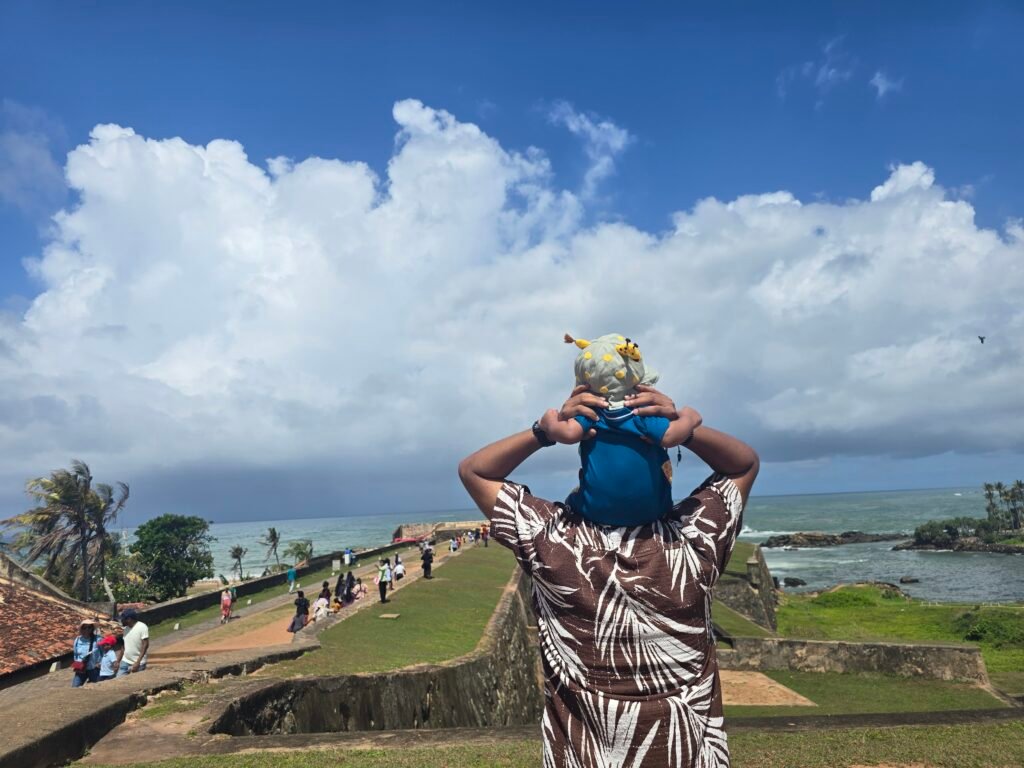
Meanwhile, if you are an Indian, this view hits differently. You remember long test matches played here, with spinners turning the ball sharply, commentators talking about sea breeze helping swing. Standing on the fort wall, I could almost hear crowd noise in my head – whistles, claps, people shouting “India, India”. Suddenly, cricket did not feel like a sport anymore. It felt like a shared memory between countries, played on the most beautiful ground possible.
Practical tips nobody tells about Galle Dutch Fort Sri Lanka
Carry water. Heat is strong.
Wear shoes with grip. Stones are slippery.
Avoid noon walks. Sun burns the fort stones.
Places in Colombo you should visit before coming to Galle
When you plan your Sri Lanka trip, I always feel it is better to start with Colombo. The city prepares your heart for places like Galle. Here are a few Colombo spots that stayed with me deeply.
Independence Square is perfect for a calm morning walk. The wide open space, green lawns and quiet roads slowly wake you up. I have written a full blog here Independence Square where I share how peaceful it feels and when is the best time to visit.
Gangaramaya Temple shows the spiritual side of Colombo. It is not only a temple, but also a museum of faith, culture and kindness. I have shared my complete Gangaramaya Temple experience in my blog. You should read it before going so you don’t rush there.
The Colombo National Museum tells Sri Lanka’s story like no other place. From kings’ crowns to ancient manuscripts, every hall whispers history. I have a detailed blog on Colombo National Museum where I also talk about the Natural History Museum next to it. Do refer to that blog for full tips.
Finally, Lotus Tower Colombo shows you the modern face of the city. Watching Colombo from that height changes your perspective completely. I have already written about Lotus Tower and my funny mishaps there. Read that blog here too before your visit so you don’t miss anything.
Best time to visit Galle Dutch Fort Sri Lanka
Early morning is magical. Light is soft.
Evening sunset around 5:30 PM is unforgettable.
Avoid afternoons.
Timings & tickets of Galle Dutch Fort Sri Lanka
Open all day.
No entry ticket.
How to reach Galle Dutch Fort Sri Lanka
From Colombo – 2.5 hours by train or car.
Galle railway station is just outside fort gate.
Planning trip from India to Galle Dutch Fort Sri Lanka
Sri Lanka is one of the easiest foreign trips for Indians.
Visa
Indian passport holders can apply for ETA online. It takes 1–2 days.
Flights
Direct flights from Chennai, Bangalore, Mumbai and Delhi to Colombo.
Currency
Carry USD and exchange at Colombo airport. Sri Lankan Rupee is used.
SIM card
Buy Dialog or Mobitel SIM at airport. Cheap and fast.
Food
Indian food is easily available. However, try Sri Lankan rice & curry.
Mistakes to avoid
Don’t compare Sri Lanka to India. Enjoy it as it is. Also, don’t overpack – Colombo is casual.
Galle Dutch Fort Sri Lanka map location
Galle Dutch Fort Sri Lanka on Google Maps https://maps.app.goo.gl/JM4YrPBJLM5ogCEL9
FAQs about Galle Dutch Fort Sri Lanka
Is Galle Fort Sri Lanka safe at night?
Yes, very peaceful.
How much time needed?
Half day.
Is it kid friendly?
Yes, wide walking paths.
Are cafés costly?
Moderate, worth it.
Conclusion
When I left Galle Dutch Fort Sri Lanka, my legs were tired. My heart was not.
I felt like I didn’t visit a place. I lived a story.
Some places don’t shout beauty. They whisper history. And you listen, without even trying.
To know us more follow us on instagram: https://www.instagram.com/roadtrips_of_india/
Related posts:
 Lotus Tower Colombo – Everything You Need to Know, How to Visit, What You Feel When You Go Up
 Galle Face Green Ultimate Guide – Everything You Need to Know About Colombo’s Seaside Soul
 Colombo National Museum Ultimate Guide – How to Explore, What You Feel, Everything You Need to Know Before You Go
 Independence Square Colombo: Everything You Need to Know Before You Visit
[…] I have written a complete guide for exploring Galle Fort, which is linked below : https://roadtripsofindia.com/galle-dutch-fort-sri-lanka-ultimate-guide-everything-you-need-to-know-b… […]