Sacred Monkey Forest Sanctuary in Bali is wild, calm, chaotic, and spiritual. A real Indian traveler’s honest experience from Ubud.
Introduction
Sacred Monkey Forest Sanctuary was on my must-see list initially.
Honestly, I thought it would be crowded, noisy, maybe even scary. Monkeys everywhere, tourists screaming, phones getting snatched. That picture was already in my head.
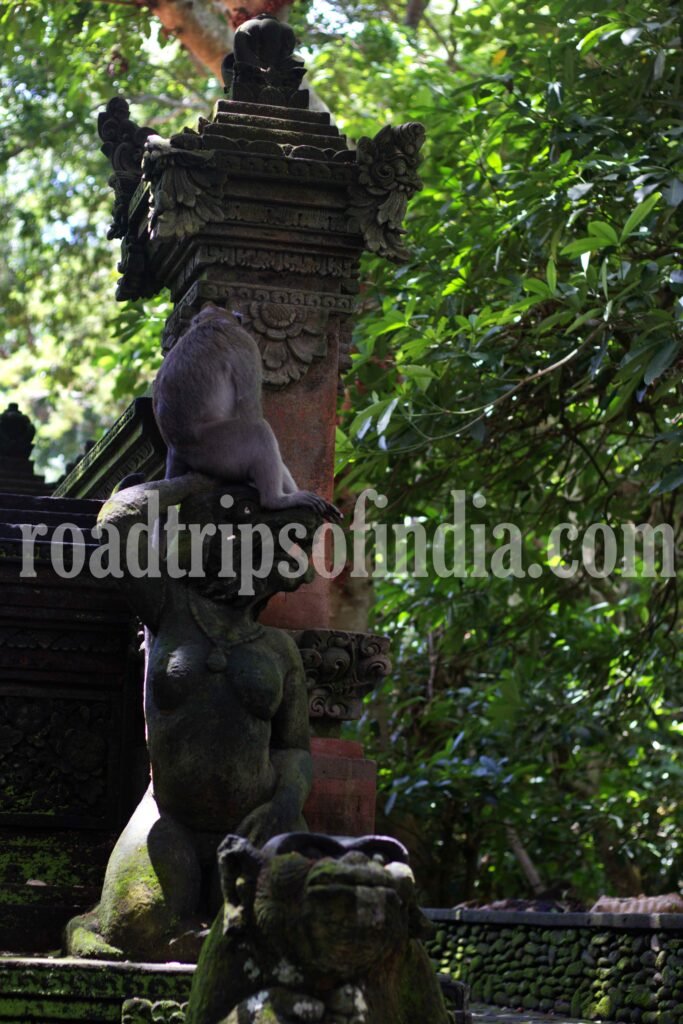
But the moment I stepped inside Sacred Monkey Forest Sanctuary, something softened.
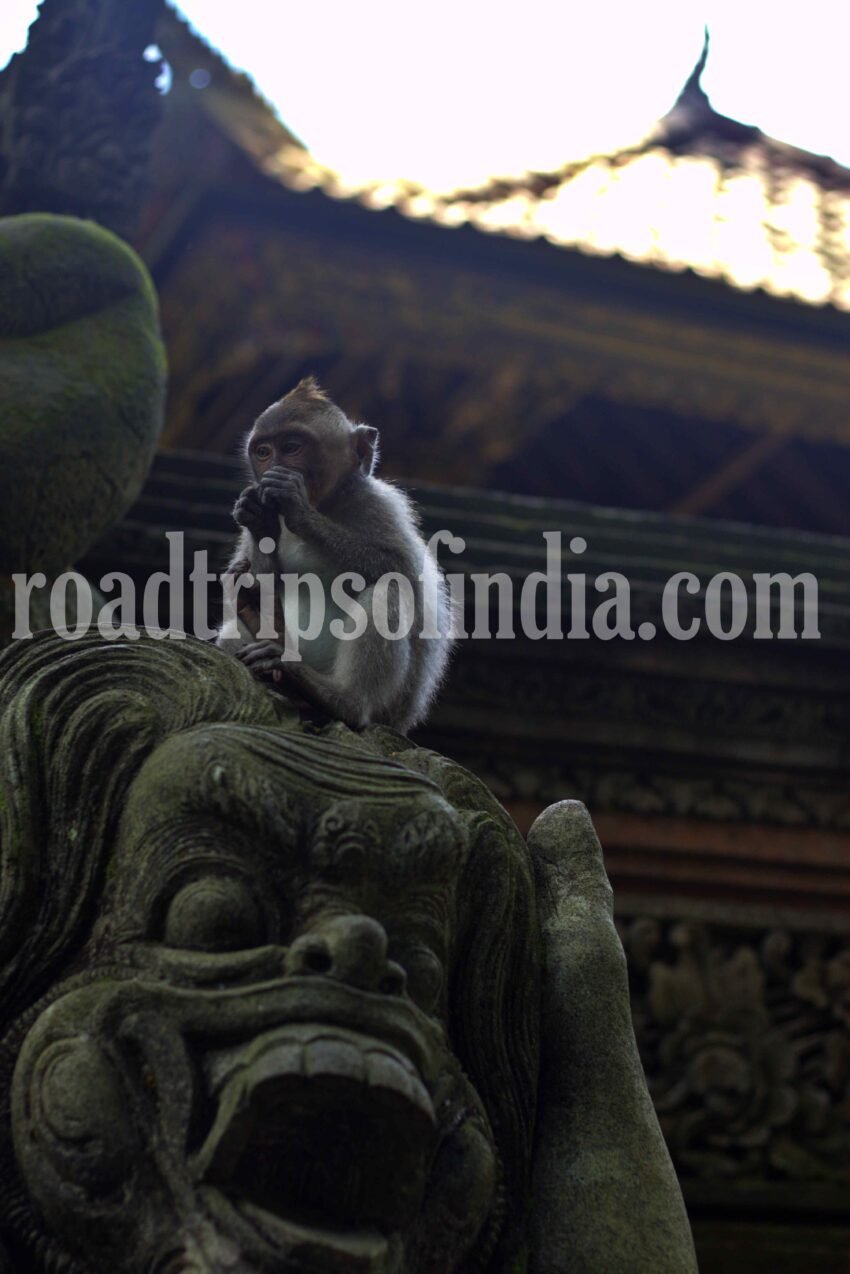
The air felt different. Cooler. A little heavy, but in a peaceful way. Tall trees blocked the noise of Ubud roads. Stone paths disappeared into green shadows. Monkeys sat casually like they owned the place. Which, to be fair, they do.
I slowed down without trying.
And for once, I wasn’t in a hurry to click photos.
This place doesn’t announce itself loudly. It waits for you to notice.
Why this place is worth visiting
Sacred Monkey Forest Sanctuary is not just about monkeys.
That’s the biggest misunderstanding.
It’s about coexistence. Humans, animals, temples, trees — all sharing the same breathing space. No fences shouting danger. No glass walls separating life.
You feel slightly out of control here.
And that’s refreshing.
The monkeys are free.
The temples are active.
The forest feels alive, not preserved.
Also, unlike many tourist places, this one doesn’t feel fake. It doesn’t try too hard. Some things are broken. Most stones are mossy. Some monkeys are mischievous. And somehow, that makes it beautiful.
History of Sacred Monkey Forest Sanctuary
Long before tourists arrived with backpacks and GoPros, Sacred Monkey Forest Sanctuary was a spiritual forest for the local Balinese community of Padangtegal village.
The forest was protected because it was sacred.
Not because it was profitable.
Temples were built inside to honour Hindu deities. The monkeys were seen as guardians, not attractions. Locals believed the forest balanced energies — human and natural.
Over time, visitors started coming. Slowly at first. Then a lot. The locals adapted, but they didn’t destroy the soul of the place. Even today, the sanctuary is managed by the village, not a big corporation.
That’s why it still feels rooted.
Not polished.
Not overly commercial.
Architecture and natural beauty inside Sacred Monkey Forest Sanctuary
Stone temples appear suddenly between trees.
No dramatic entry. They just exist.
You’ll see traditional Balinese carvings, cracked steps, moss-covered walls, guardian statues with broken noses. Instead of looking abandoned, they look lived with.
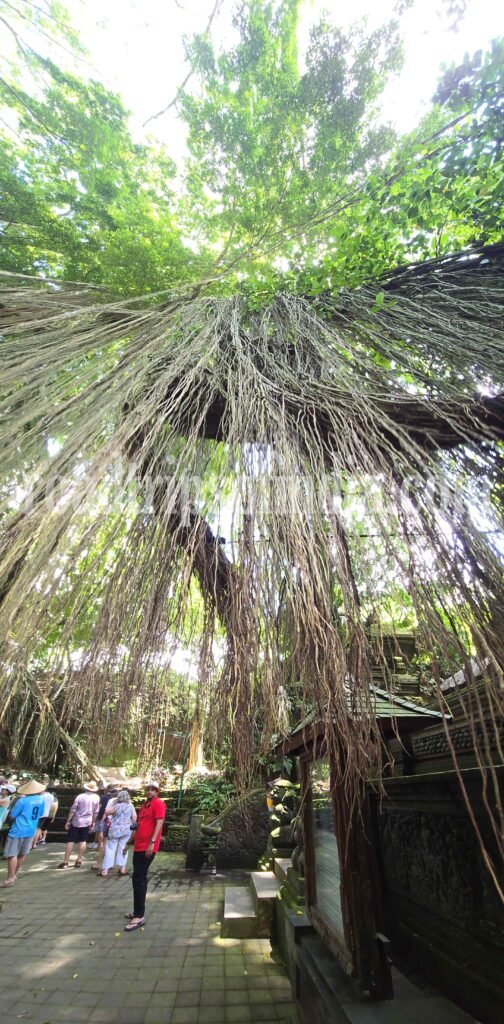
Roots grow over paths like veins.
Sunlight filters unevenly through leaves.
There’s a constant sound — birds, insects, rustling branches, monkeys jumping.
The forest is dense but not dark.
Sacred, but not intimidating.
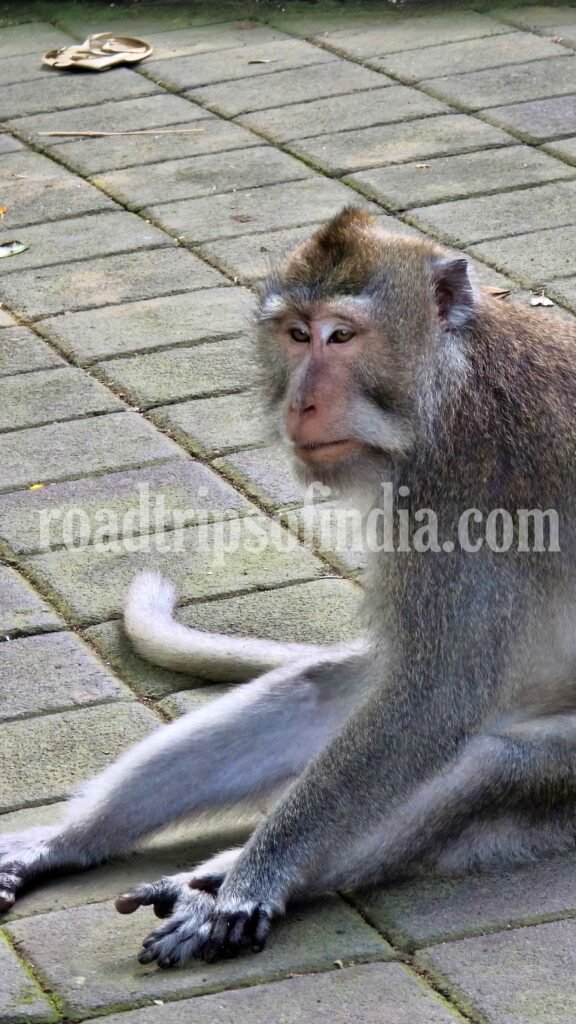
Some spots feel ancient. Others feel playful.
It changes every few steps.
Sacred Monkey Forest Sanctuary: step-by-step visitor experience
Entry moment
You buy your ticket.
You adjust your bag nervously.
Someone warns you again about sunglasses.
Then you enter.
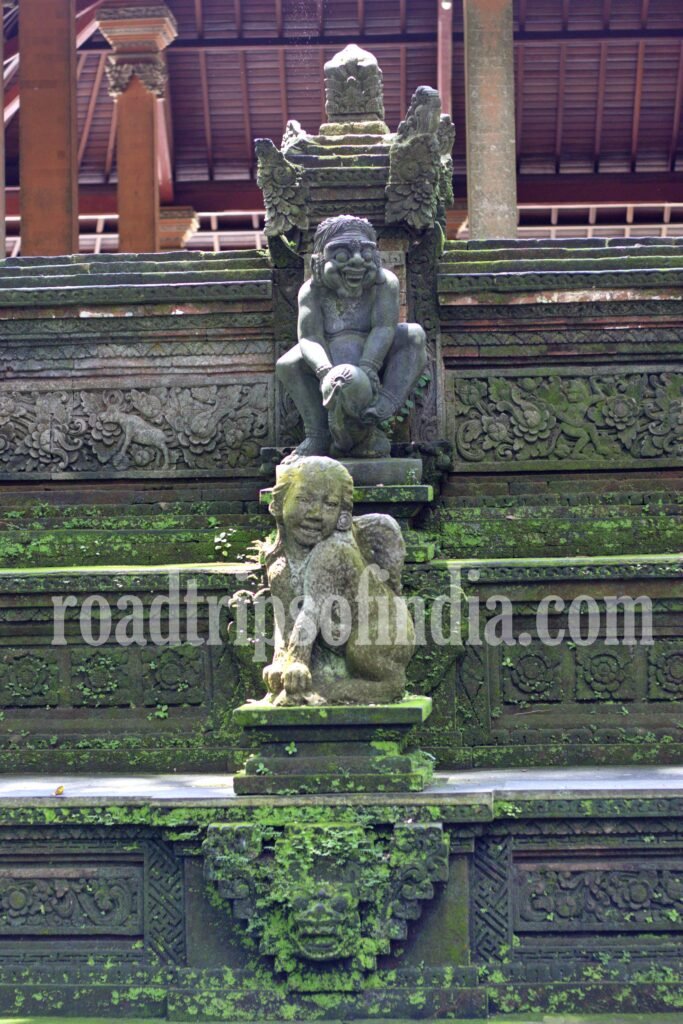
First encounter
Within minutes, a monkey will look directly at you.
Not aggressively. Just observant.
You suddenly become aware of your body language.
Slow steps. Hands close. No sudden moves.
Walking deeper
Paths split. Bridges appear.
You hear water flowing. You stop without reason.
Monkeys sit grooming each other. Mothers carry babies like it’s just another Tuesday.
Temple zones
You can’t enter inner sanctums unless you’re there for prayer. And that’s okay. Watching from outside feels respectful.
Some tourists whisper. Some don’t.
The forest absorbs all of it.
Exit feeling
You don’t rush out.
Even if your feet are tired, your mind isn’t.
How Sacred Monkey Forest Sanctuary was earlier vs how it is now
Earlier, it was mostly for locals and spiritual purposes. Few outsiders. Less noise.
Now, it’s popular. Sometimes crowded. Especially midday.
But here’s the thing — it hasn’t lost itself completely.
Yes, there are ticket counters and signboards now.
Yes, monkeys are used to humans.
But rituals still happen.
Offerings still get placed.
The forest still decides the mood.
It hasn’t turned into a show.
It’s still a living space.
Things people usually miss here
Most people rush.
They miss:
- Small shrines hidden behind trees
- Old banyan roots forming natural arches
- Monkeys interacting quietly, not stealing
- The shift in temperature as you move deeper
- How calm you feel after 20 minutes inside
People look for drama.
This place offers stillness.
Practical tips nobody tells you
- Do not carry food, even inside bags
- Avoid loose jewellery
- Don’t stare into a monkey’s eyes too long
- Walk confidently but gently
- If a monkey climbs on you, don’t scream
- Early morning feels completely different from afternoon
- Wear clothes you don’t mind getting dusty
And one more thing —
Don’t try to control the experience. Let it happen.
Best time to visit Sacred Monkey Forest Sanctuary
Morning. Always.
Between 8:30 AM and 10:30 AM, the forest is calmer. Monkeys are relaxed. Light is softer. Fewer tour groups.
Afternoons get noisy.
Late evenings feel rushed.
If you want to feel the place, go early.
Timings & tickets
- Timings: 9:00 AM to 6:00 PM (last entry around 5:00 PM)
- Tickets:
- Adults: approx IDR 80,000
- Children: approx IDR 60,000
Prices can change slightly, but it’s reasonable for the experience.
How to reach Sacred Monkey Forest Sanctuary
Sacred Monkey Forest Sanctuary is located in Ubud, in Indonesia.
- From central Ubud: walkable
- From Seminyak/Kuta: 1.5–2 hours by car
- Best option: private taxi or scooter
Traffic in Bali is unpredictable. Start early.
Planning your trip from India
Visa for Indians
Indians get Visa on Arrival for Bali.
Simple process. Passport validity minimum 6 months.
Flights
Direct flights are available from major Indian cities like Delhi, Mumbai, and Bengaluru to Denpasar.
Flight duration: around 6–7 hours.
Currency
Indonesian Rupiah (IDR).
Exchange some cash at the airport, rest in Ubud.
SIM
Buy a local SIM at the airport.
Network coverage in Ubud is good.
Food
Indian food is available, but try local Balinese food at least once. Ubud has great cafes too.
Common mistakes to avoid
- Treating monkeys like pets
- Feeding them secretly
- Rushing through the forest
- Visiting during peak noon hours
- Carrying plastic bags
- Expecting a zoo-like setup
This is not entertainment.
It’s a shared space.
Nearby places to visit
After Sacred Monkey Forest Sanctuary, you can explore:
- Ubud Palace
- Campuhan Ridge Walk
- Saraswati Temple
- Local art markets
- Rice terraces nearby
Everything is close.
No long drives needed.
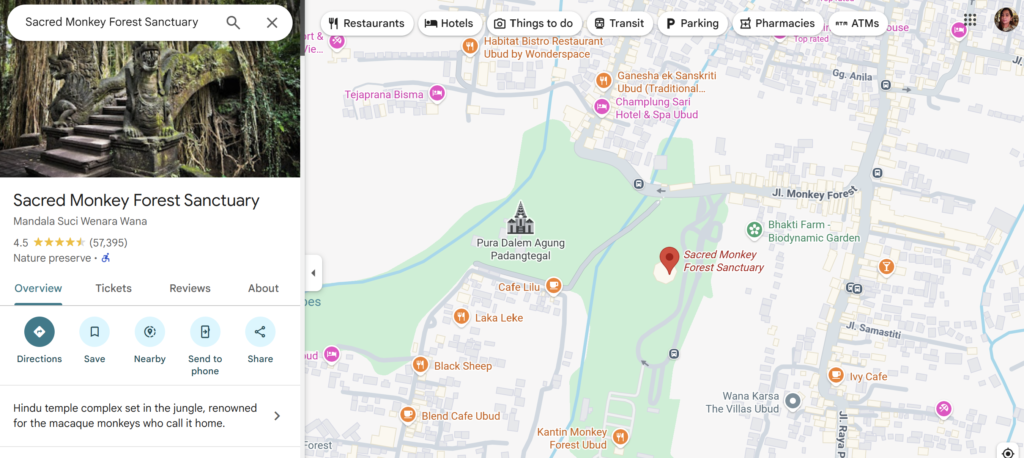
Map location
Sacred Monkey Forest Sanctuary is centrally located in Ubud, easily searchable on Google Maps. Just type the name, and it shows up clearly.
FAQs about Sacred Monkey Forest Sanctuary
Q1. Is Sacred Monkey Forest Sanctuary safe?
Yes, if you follow rules and stay calm.
Q2. Can children visit?
Yes, but parents must be careful.
Q3. How much time is enough?
1.5 to 2 hours is perfect.
Q4. Is it worth it if I fear monkeys?
Yes. You’ll be surprised how quickly fear fades.
Conclusion
When I walked out of Sacred Monkey Forest Sanctuary, I didn’t feel excited.
I felt grounded.
Something about watching another species live freely, without performing for us, shifts perspective. You realise how loud our lives are. How rushed. How controlled.
This forest doesn’t try to impress.
It just exists.
And maybe that’s why it stays with you.
Not in photos.
But somewhere quieter.
If you are going to Bali, I’ve also shared my personal experiences from a few other beautiful temples that are worth visiting.
Ulun Danu Beratan Temple – https://roadtripsofindia.com/ulun-danu-beratan-temple-bali-indonesia-complete-guide-you-need-to-know/,
Tanah Lot Temple – https://roadtripsofindia.com/tanah-lot-temple-bali-indonesia-ultimate-guide-you-need-to-know/, and
Besakih Temple – https://roadtripsofindia.com/besakih-temple-bali-indonesia-ultimate-guide-on-how-to-visit-everything-you-need-to-know/. Each place has a different feeling, and I’ve written honestly so you can plan better, not just take photos.
To know us more follow us on instagram: https://www.instagram.com/roadtrips_of_india/