Malaysia Batu Caves is more than colourful steps. Read a real, emotional travel experience with tips, history, and honest planning advice from India.
Introduction on Malaysia Batu Caves
When people talk about Batu Caves, they usually mention the rainbow stairs. Honestly, that is just the beginning.
This place is not loud, not fancy, and not trying to impress you. Still, somehow, it stays with you.
Located just outside Kuala Lumpur in Malaysia, Batu Caves feels like a strange mix of devotion, chaos, sweat, silence, and curiosity. One moment you are surrounded by tourists clicking photos. Meanwhile, the next moment, you hear temple bells echoing inside a massive cave.
I did not expect to feel emotional here. However, somewhere between the steep steps and the smell of incense, something shifted quietly inside me.
Why Malaysia Batu Caves place is worth visiting
First of all, Batu Caves is not just a tourist spot. It is alive. People pray here daily. Festivals happen here. Life goes on here.
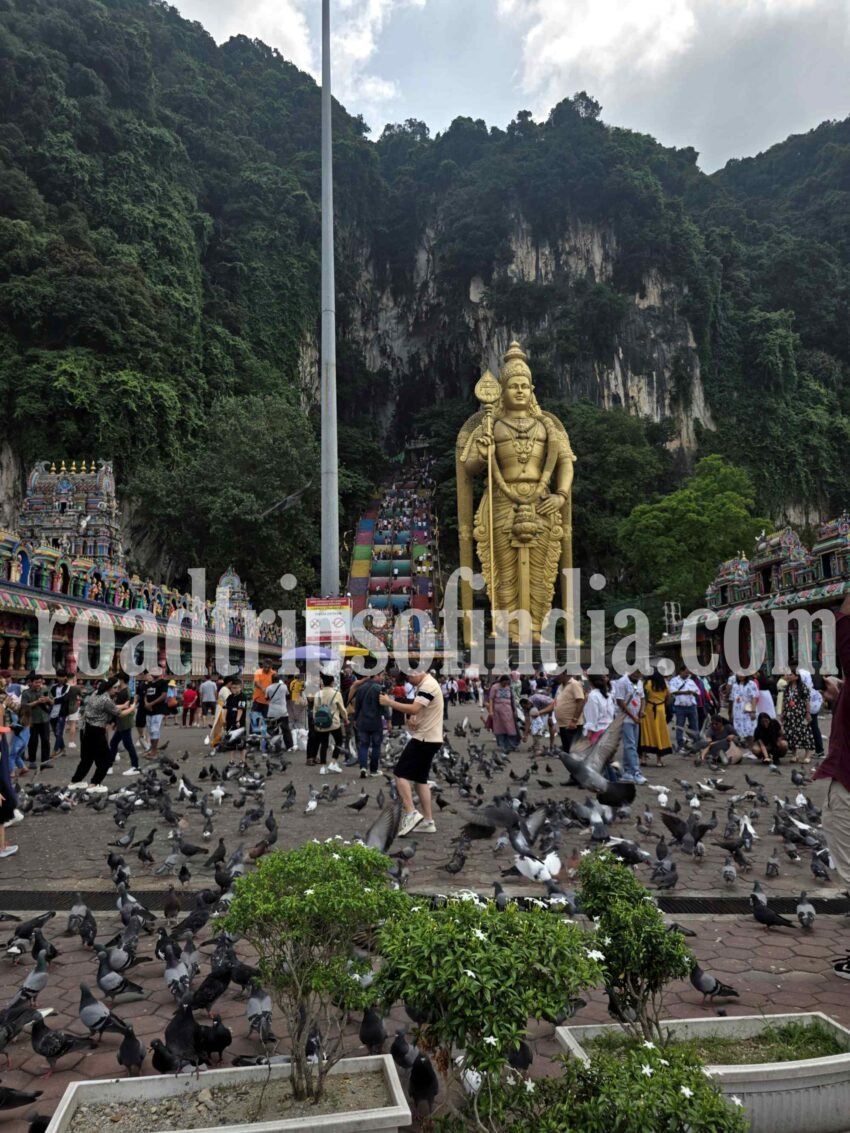
Secondly, the scale of the place is unreal. You feel tiny standing below that golden Murugan statue. Honestly, it humbles you instantly.
Also, if you are Indian, there is a strange familiarity. Tamil chants, barefoot devotees, coconuts being broken — it feels close to home, yet very far away.
However, what really makes it worth visiting is the contrast. Nature and faith, noise and silence, chaos and calm — all in one frame.
History of Malaysia Batu Caves
Batu Caves is around 400 million years old. The limestone caves existed long before humans thought of temples.
However, in the late 19th century, the caves became a place of Hindu worship. Later, they were dedicated to Lord Murugan. Since then, it has grown into one of the most important Hindu pilgrimage sites outside India.
Every year during Thaipusam, millions of devotees walk here carrying kavadis. Some walk barefoot for kilometres. Some pierce their bodies as part of vows. Watching this, honestly, changes how you see devotion.
Architecture of Batu Caves
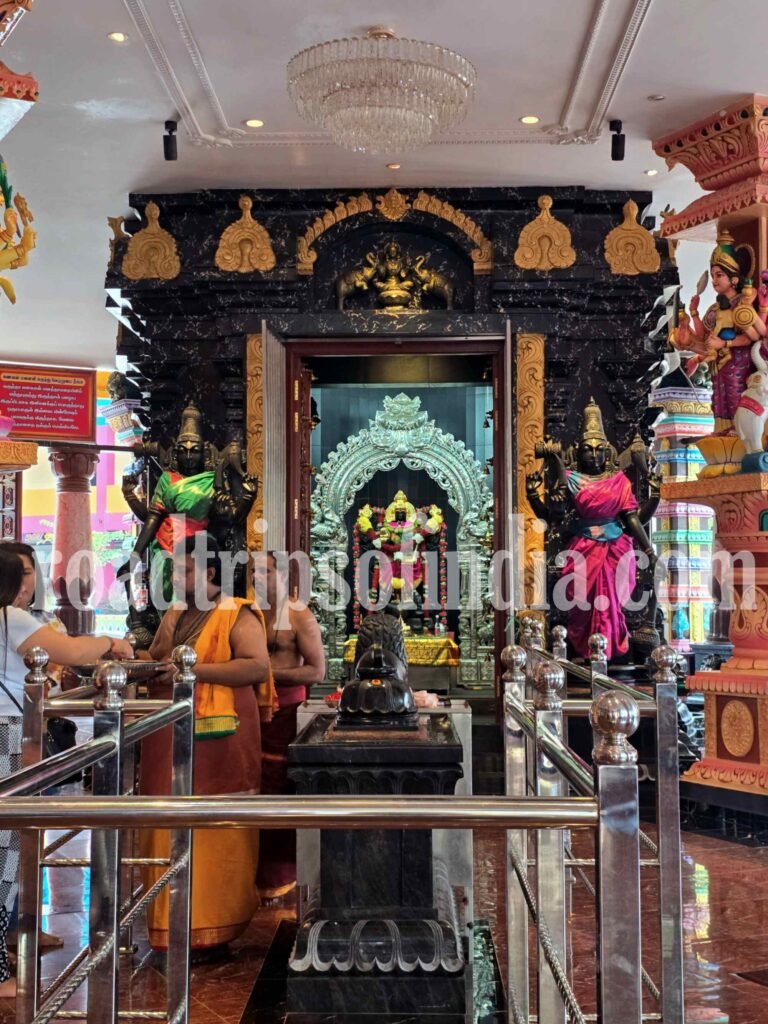
The caves themselves are massive. The main cave, called Temple Cave, has a very high ceiling. Sunlight enters from the top, which makes the space feel divine without trying too hard.
Then there are the famous steps — 272 of them. Earlier, they were plain. Now, they are painted in bright colours. Some people love it. Some don’t. Personally, I feel it adds energy.
The golden statue of Lord Murugan stands tall at the base. It does not scream for attention. Still, you cannot ignore it.
Monkeys jump around freely. Sometimes they look cute. Sometimes they look dangerous. That unpredictability adds to the experience.
Step-by-step visitor experience
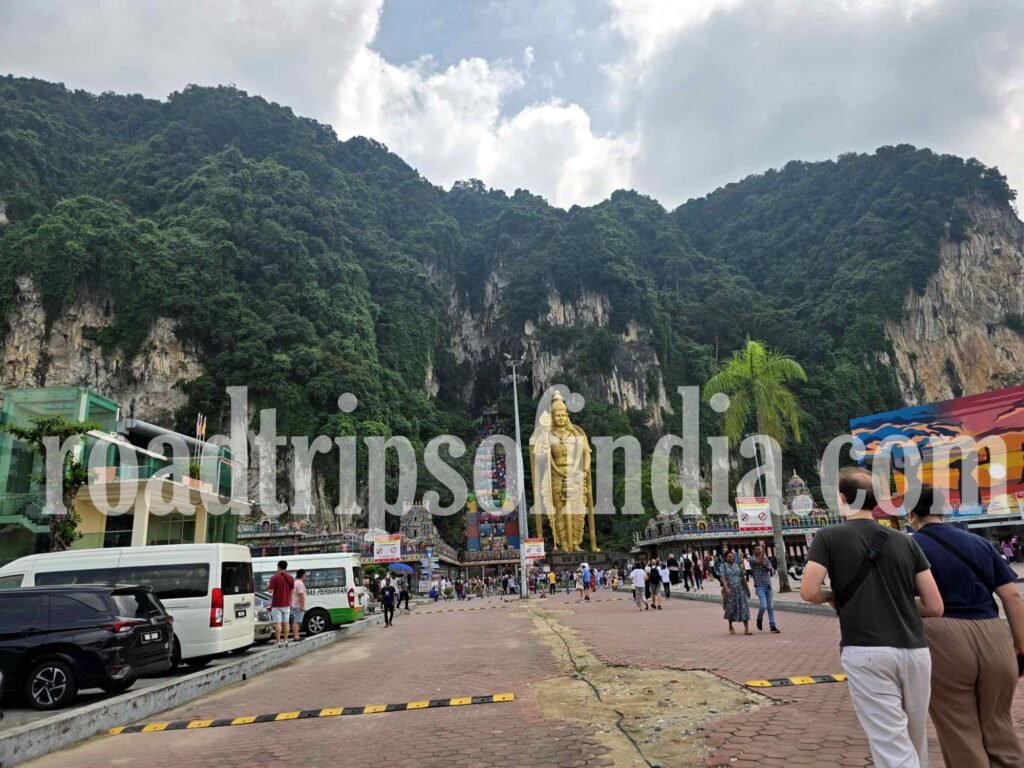
You arrive and first see the statue. You stop. Everyone stops. Photos happen naturally.
Then you look up. The stairs feel intimidating at first. However, once you start climbing, your body adjusts.
Midway, monkeys watch you closely. Honestly, they judge your food choices.
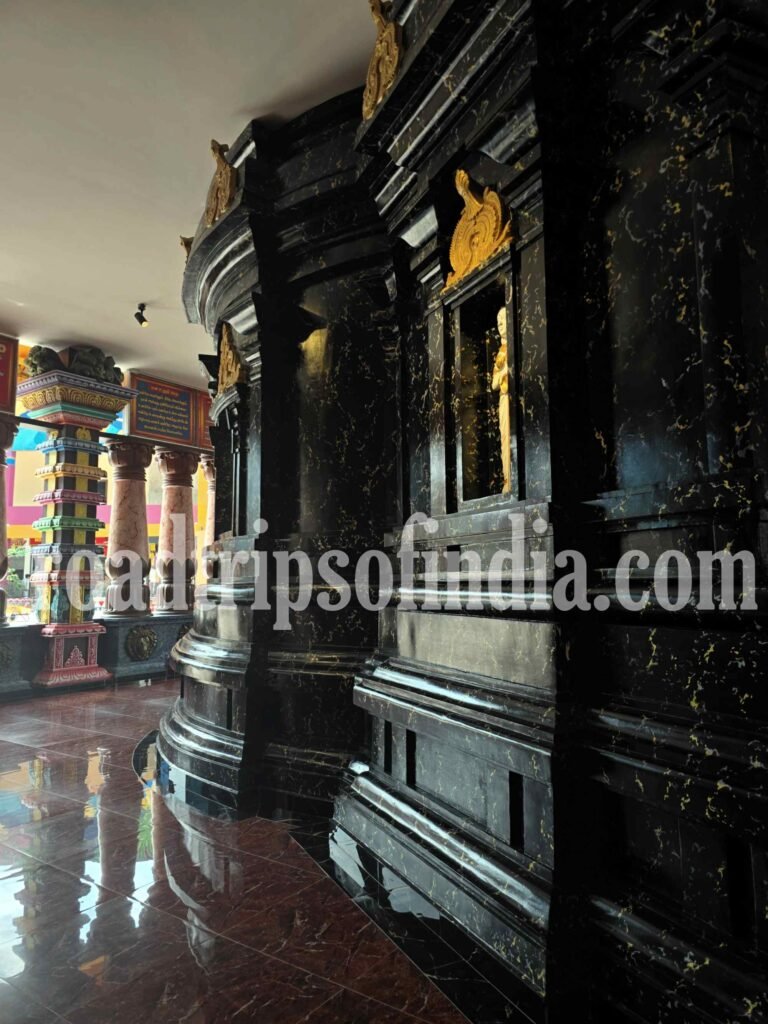
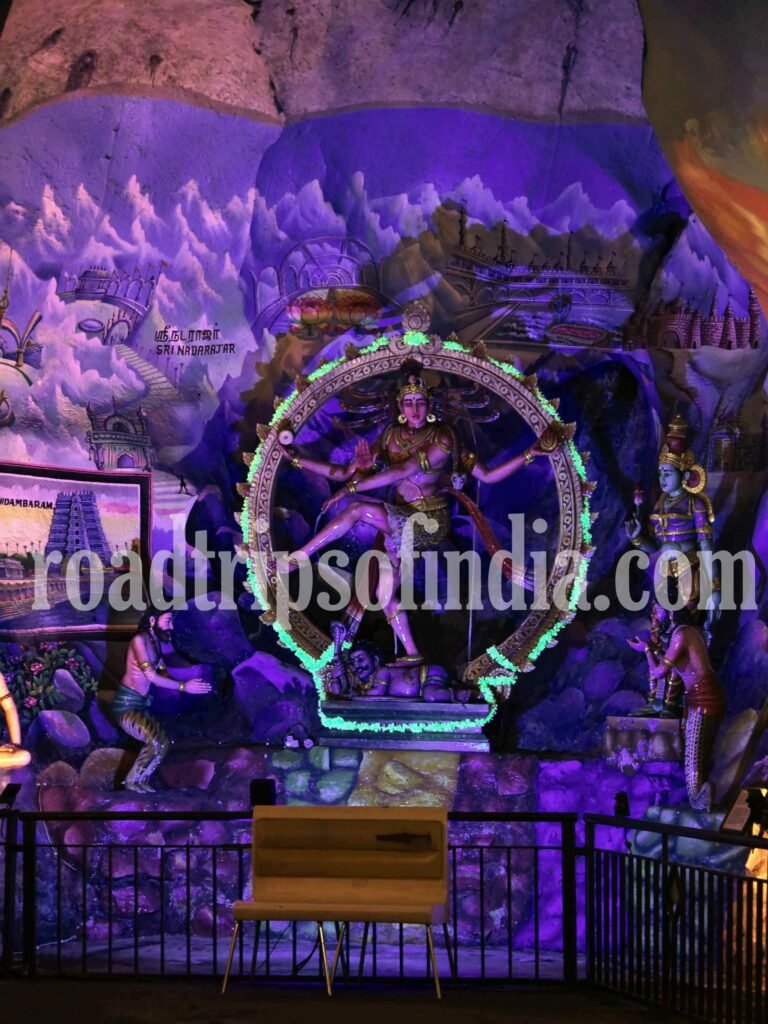
You remove footwear before entering the cave. The temperature drops slightly inside. Chanting echoes. The air smells of incense and stone.
People sit quietly. Some pray. Some just stand and observe. You feel slow, even if you didn’t plan to.
When you come down, the world feels louder again.
The Quiet Garden Beside the Temple
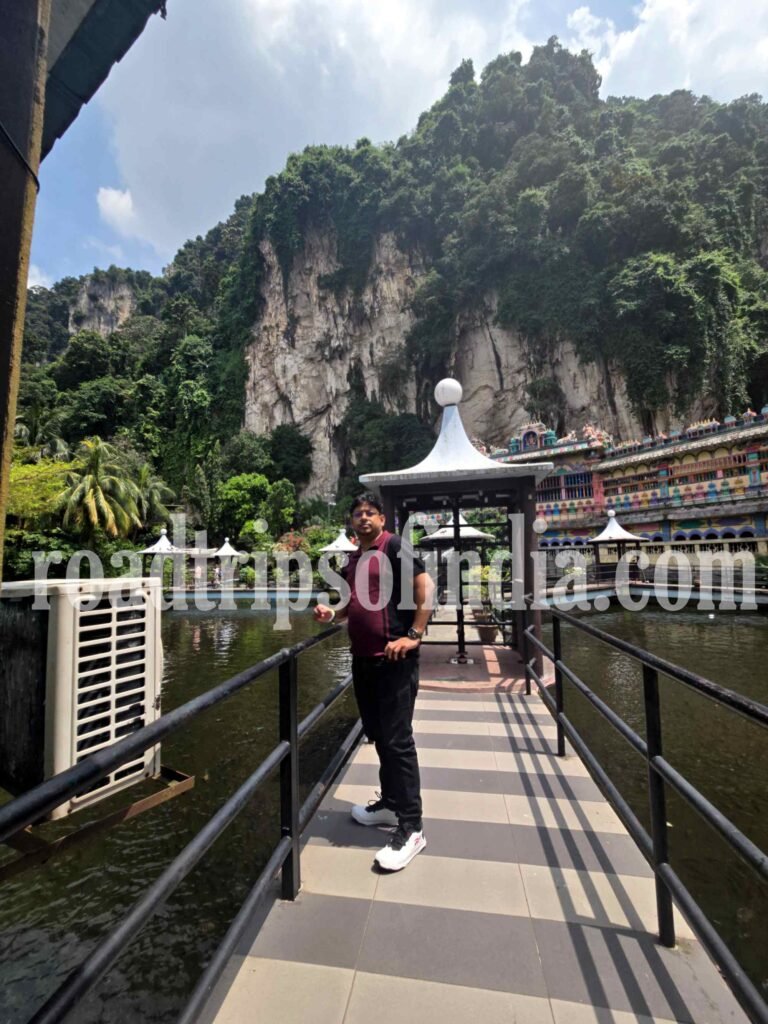
Just beside the main temple area, there is a peaceful garden-like space that many visitors usually miss. A narrow walking path runs right through the middle of a small pond, and honestly, this place feels very calm compared to the busy steps and crowds near the temple.
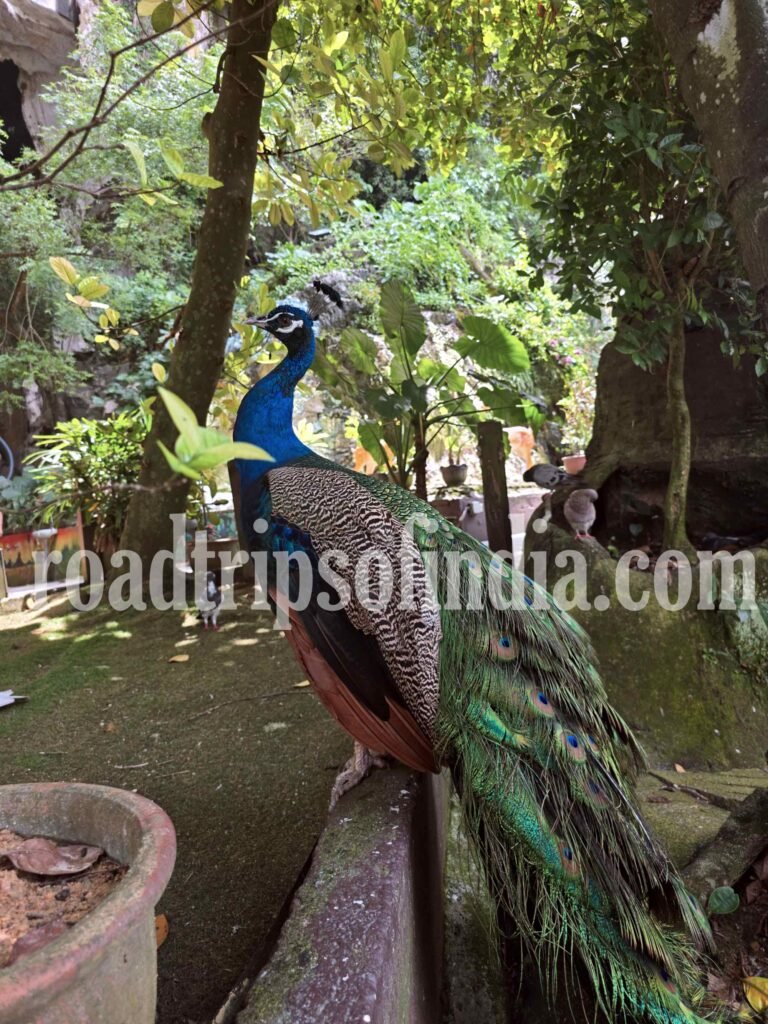
Meanwhile, sometimes small cultural activities take place here, which adds a nice local touch. You can also spot many beautiful birds around. We were lucky enough to see a peacock walking freely in this area. Watching it move so calmly, with hardly any crowd around, felt really special and relaxing.
A Small Cave Experience for Those Who Can’t Climb Up
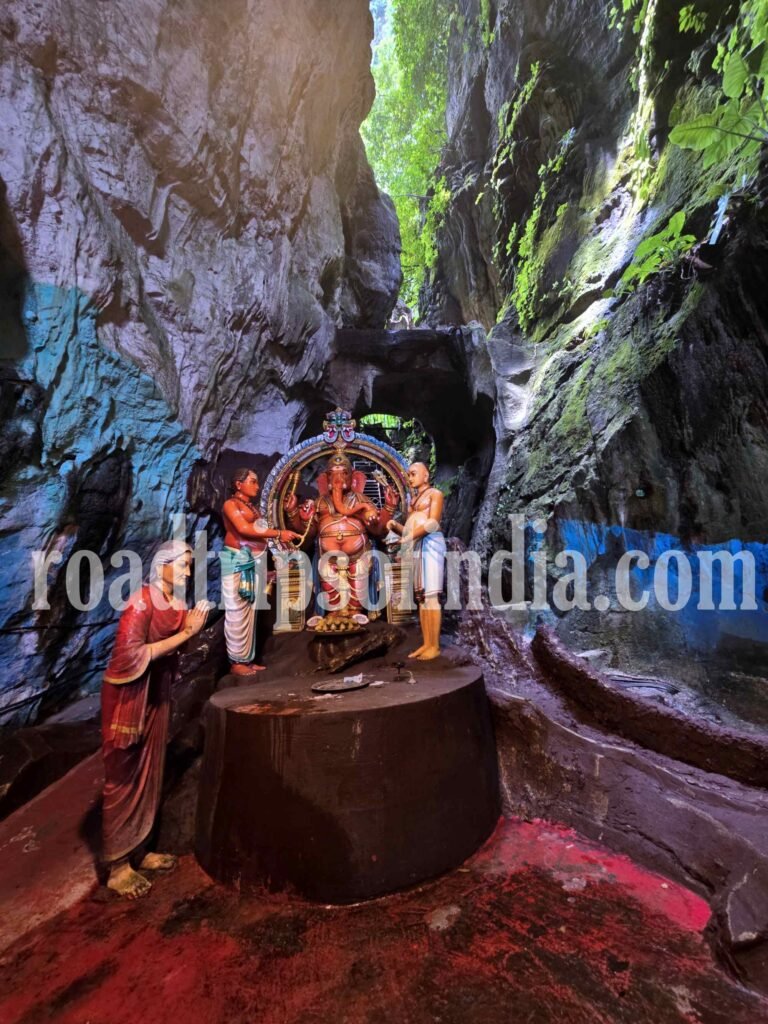
Near this garden area, there is a small cave, often referred to as the reptile cave. Inside, you can see reptiles and learn a little about them. It is not scary at all, but actually quite interesting, especially if you are visiting with family or kids.
This part is very useful for older people or anyone who cannot climb the steep stairs to the main Batu Caves. In such cases, this small cave works like a gentle introduction, almost like a demo of the bigger caves above. Even without climbing, you still get a good feel of the place, and honestly, the experience is beautiful in its own simple way.
How it was earlier vs how it is now
Earlier, Batu Caves felt raw. Less organised. Less colourful. Fewer tourists.
Now, it is more polished. The steps are painted. Cleanliness has improved. Facilities are better.
However, it has also become crowded. Instagram has found it. Honestly, that changes the vibe a bit.
Still, if you go early morning, you can feel the old soul of the place.
Things people usually miss during visit to Malaysia Batu Caves
Many people rush only for photos. They miss the smaller caves nearby.
Also, people don’t sit inside the cave long enough. Silence here speaks.
Most tourists ignore the rituals happening around them. Watching devotees teaches patience and respect.
People also underestimate the heat and stairs. That becomes a mistake later.
Practical tips nobody tells
- Wear clothes that cover shoulders and knees
- Carry minimal food (monkeys are smart thieves)
- Start early morning for peace
- Carry water, but finish before climbing
- Slippers are better than shoes
- Don’t rush — honestly, rushing ruins it
Best time to visit Malaysia Batu Caves
Early morning is best. The light is soft. Crowds are less. Weather feels kinder.
If possible, visit during Thaipusam only if you can handle crowds. It is powerful but intense.
Avoid afternoons. Heat plus steps equals regret.
Timings & tickets for Malaysia Batu Caves
- Open daily
- Usually from early morning to evening
- Entry is free
- Some smaller caves may have a small fee
How to reach Malaysia Batu Caves
From Kuala Lumpur, Batu Caves is easy to reach.
- Local train from KL Sentral
- Taxi or Grab works well
- Roads are good
Honestly, public transport is the simplest.
Planning trip from India
Visa
Malaysia offers easy visa options for Indians. Apply online in advance.
Flights
Direct flights from major Indian cities like Delhi, Mumbai, Bangalore, and Chennai are available.
Currency
Malaysian Ringgit (MYR). Carry some cash, but cards work almost everywhere.
SIM
Buy a SIM at the airport. It is cheap and reliable.
Food
Indian food is easily available. Vegetarian options are plenty near Batu Caves.
Mistakes to avoid
- Overplanning
- Ignoring dress code
- Visiting only for photos
Nearby places
- Kuala Lumpur city centre
- Thean Hou Temple
- Genting Highlands
- Brickfields (Little India)
Map location for Malaysia Batu Caves
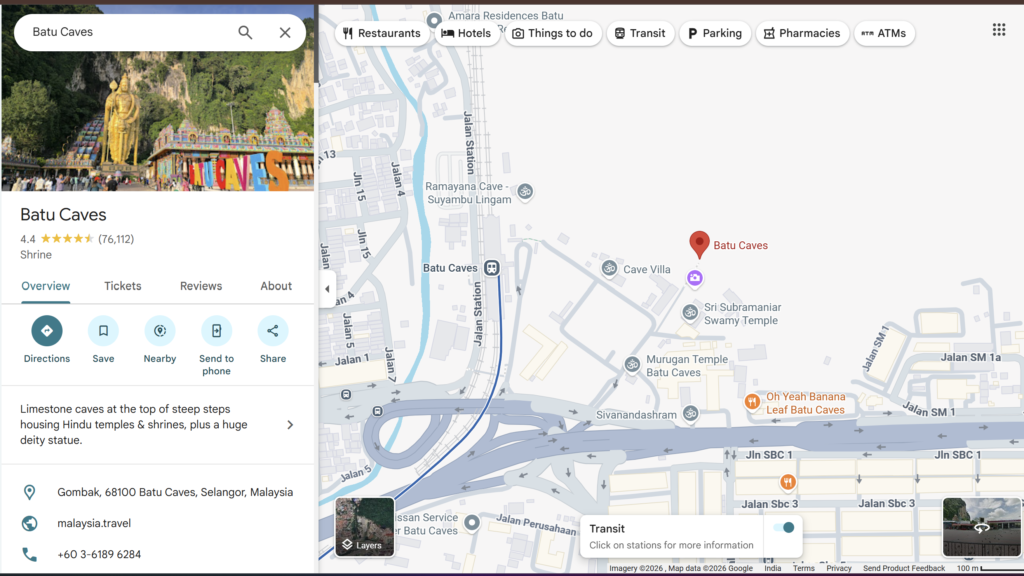
Search Batu Caves, Selangor, Malaysia on Google Maps. It is clearly marked and easy to navigate.
FAQs
Q1: Is Batu Caves suitable for kids?
Yes, but stairs can be tiring.
Q2: How much time is needed?
2–3 hours is enough if you don’t rush.
Q3: Is photography allowed?
Yes, but be respectful inside.
Q4: Are monkeys dangerous?
They can be mischievous. Stay alert.
Conclusion
I did not come to Batu Caves looking for answers. Still, I left with a quiet sense of grounding.
Some places don’t change your life dramatically. Instead, they pause it for a moment. Batu Caves did that for me.
As I walked away, sweat-soaked and tired, I realised something simple — travel is not always about joy. Sometimes, it is about feeling small, present, and honest with yourself.
And honestly, that feeling stays longer than any photo.
Many people also plan Malaysia as a short stopover and then continue their journey to Bali. If you are travelling this way and have just one day in Malaysia, Batu Caves fits perfectly into your plan.
It does not take the whole day, yet it gives you a meaningful experience of the country. If you are planning a similar route from Malaysia to Bali, do check out the other blogs written by us. They might help you plan better and avoid common mistakes during a short halt.
Ulun Danu Beratan Temple – https://roadtripsofindia.com/ulun-danu-beratan-temple-bali-indonesia-complete-guide-you-need-to-know/,
Tanah Lot Temple – https://roadtripsofindia.com/tanah-lot-temple-bali-indonesia-ultimate-guide-you-need-to-know/, and
Besakih Temple – https://roadtripsofindia.com/besakih-temple-bali-indonesia-ultimate-guide-on-how-to-visit-everything-you-need-to-know/. Each place has a different feeling, and I’ve written honestly so you can plan better, not just take photos.
To know us more follow us on instagram: https://www.instagram.com/roadtrips_of_india/

[…] you’re planning to visit Batu Caves next, do check our detailed guide here — https://roadtripsofindia.com/malaysia-batu-caves-travel-guide-the-ultimate-experience-everything-you… , and if you want an indoor experience in Kuala Lumpur, don’t miss our complete guide to […]
[…] you’re planning to visit Batu Caves next, do check our detailed guide here — https://roadtripsofindia.com/malaysia-batu-caves-travel-guide-the-ultimate-experience-everything-you… , […]
[…] you’re planning to visit Batu Caves next, do check our detailed guide here — https://roadtripsofindia.com/malaysia-batu-caves-travel-guide-the-ultimate-experience-everything-you… , […]
[…] you’re planning to visit Batu Caves next, do check our detailed guide here — https://roadtripsofindia.com/malaysia-batu-caves-travel-guide-the-ultimate-experience-everything-you… , […]
[…] planning to visit Malaysia then visit Batu Caves next, do check our detailed guide here — https://roadtripsofindia.com/malaysia-batu-caves-travel-guide-the-ultimate-experience-everything-you… , […]