Visit Uluwatu Temple in Bali with real tips, honest experiences, sunset magic, history, mistakes to avoid, and planning help for Indian travelers.
Introduction
uluwatu temple was not love at first sight for me.
It was silence first.
The kind of silence that comes with wind, salt in the air, and a cliff so sharp that your stomach tightens for a second. Bali has many temples, yes. Beautiful ones. Busy ones. Spiritual ones. But this one… this one feels like the end of the land. Like something ancient decided to stay right at the edge.
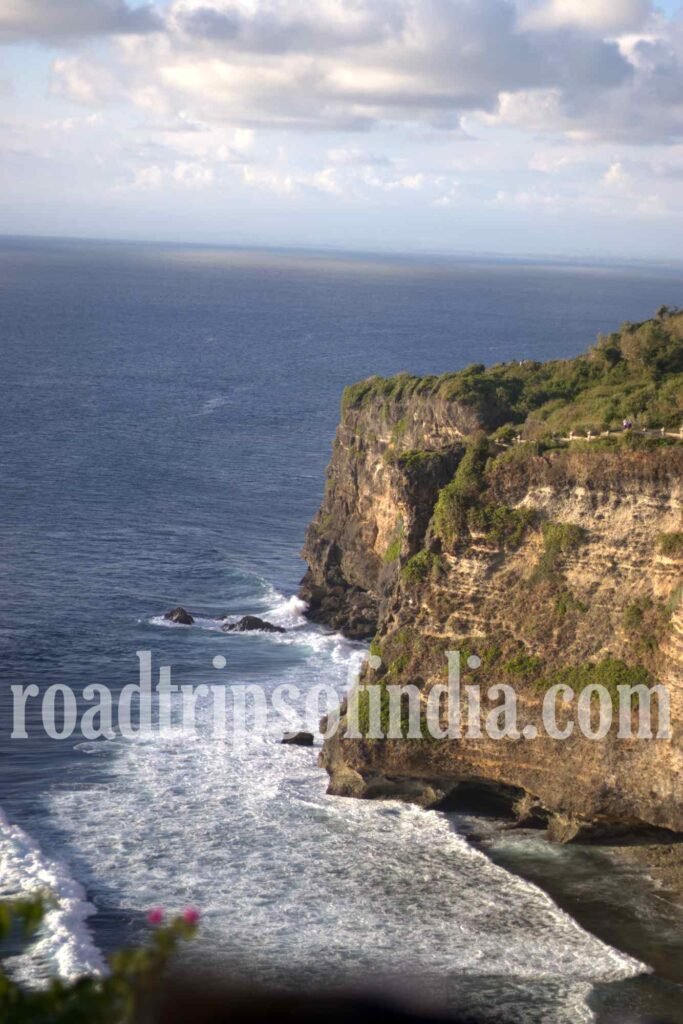
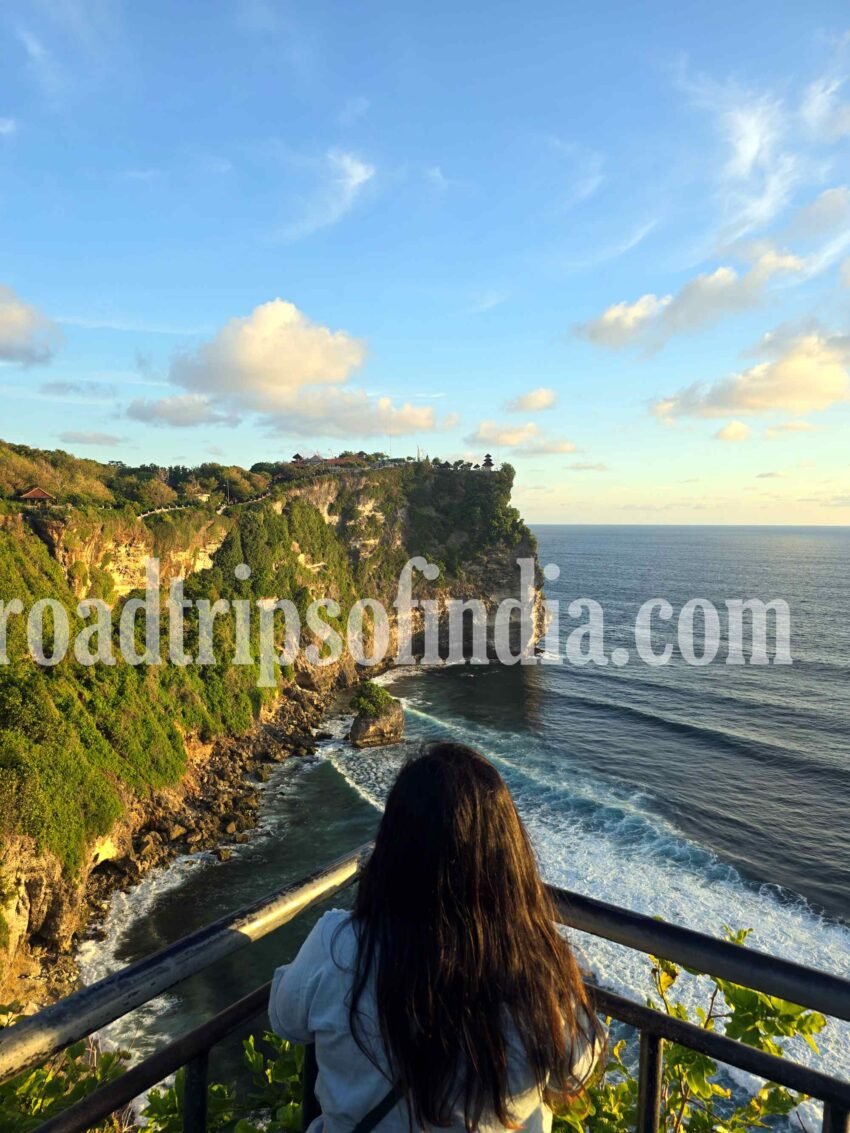
Located in the southern part of Bali, Uluwatu Temple stands high on a dramatic cliff, looking straight into the Indian Ocean. No soft entry. No gradual build-up. Just ocean, rock, and faith.
I remember thinking — how did they even build this here?
And then I stopped thinking.
Why this place is worth visiting
Let me be honest.
If you are expecting quiet meditation corners, this may not fully give you that.
If you want raw Bali, wind-in-your-face Bali, monkey-chaos-meets-sacred Bali — then yes. Absolutely yes.
Uluwatu Temple is worth visiting because:
- It feels uncontrolled by humans, even today
- The sunset here is not pretty — it’s intense
- You don’t just see the ocean, you feel it below your feet
- It stays with you longer than most places
I’ve visited beaches, waterfalls, Instagram-famous cafes.
This felt… heavier. In a good way.
History or background – told like a story
Long before tourists, cameras, and sunset crowds, this cliff was considered dangerous. Sacred, but dangerous.
Uluwatu Temple is believed to be built in the 11th century by a Javanese sage named Mpu Kuturan, and later expanded by Dang Hyang Nirartha, one of Bali’s most respected spiritual figures.
Legend says Nirartha attained moksha here — liberation from earthly life.
That alone explains the location. No middle ground. Just earth ending and eternity beginning.
The temple is one of Bali’s six directional temples, meant to protect the island spiritually. Standing there, watching waves crash endlessly below, it doesn’t feel symbolic at all. It feels literal.
Architecture and natural beauty – not separate things
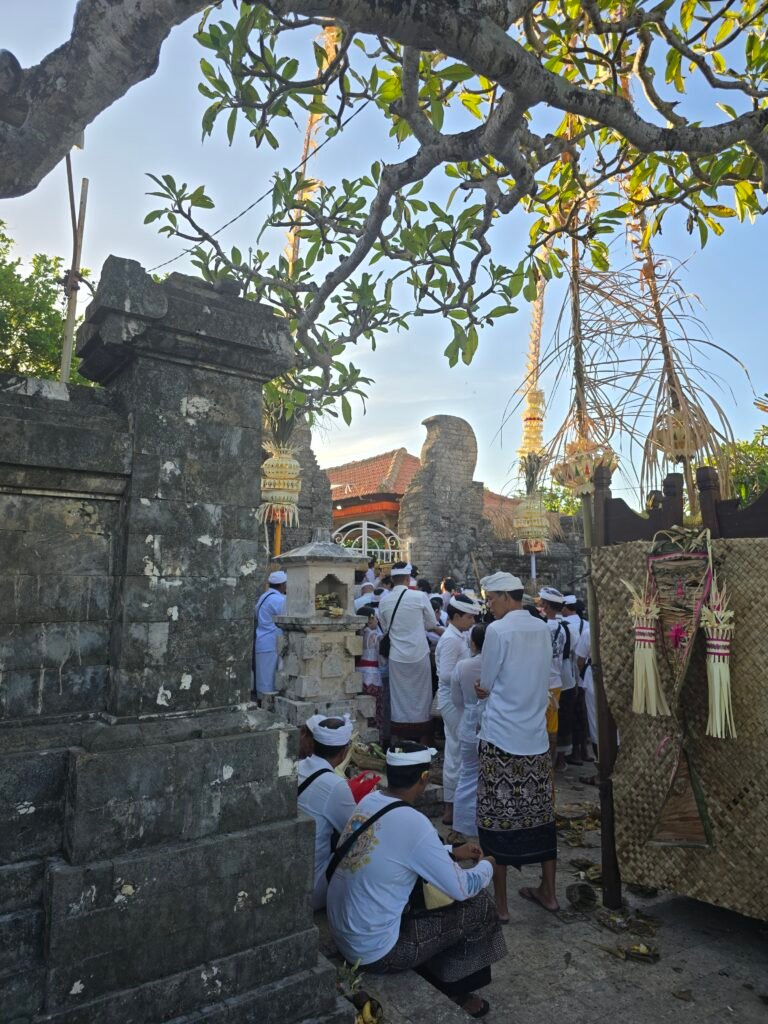
The architecture is simple.
Dark stone. Traditional Balinese carvings. No gold. No excess.
But the setting does all the work.
The temple sits on a cliff about 70 meters above sea level. The waves don’t crash gently here. They attack the rocks. Again and again. Loud. Relentless.
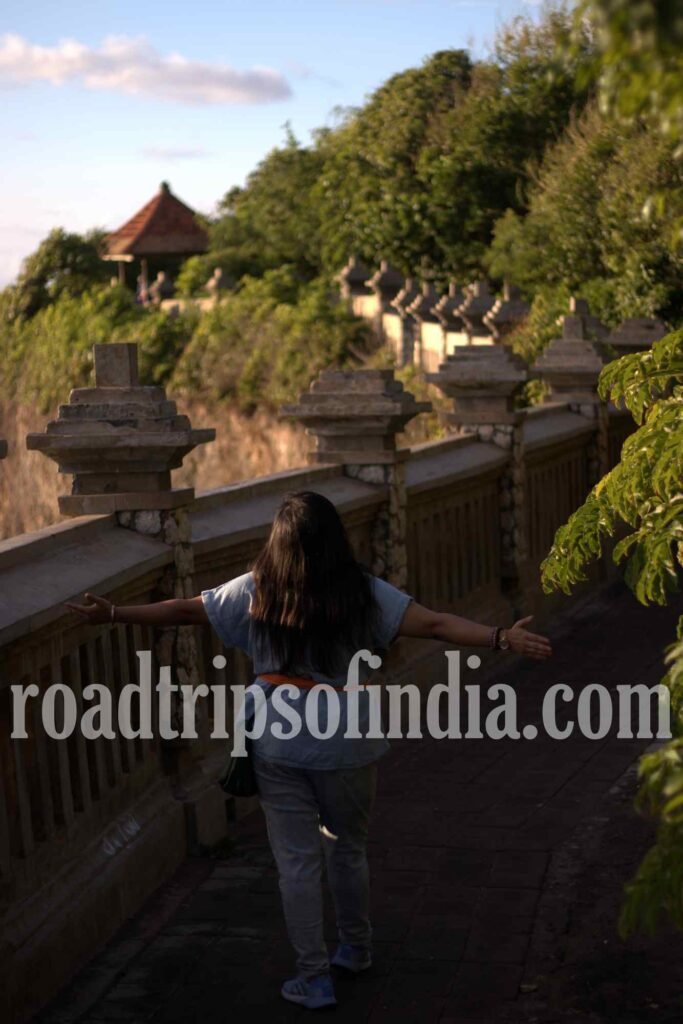
The walking paths around the temple are narrow. At places, you’ll instinctively slow down. Not because of rules. Because your body knows this is not a place to rush.
And then there’s the open sky. No barriers. Just space.
Step-by-step visitor experience (what actually happens)
You arrive, park.
and think, okay, normal tourist place.
Then:
- Sarong counter – compulsory. No exceptions.
- You tie it awkwardly, hoping it doesn’t fall.
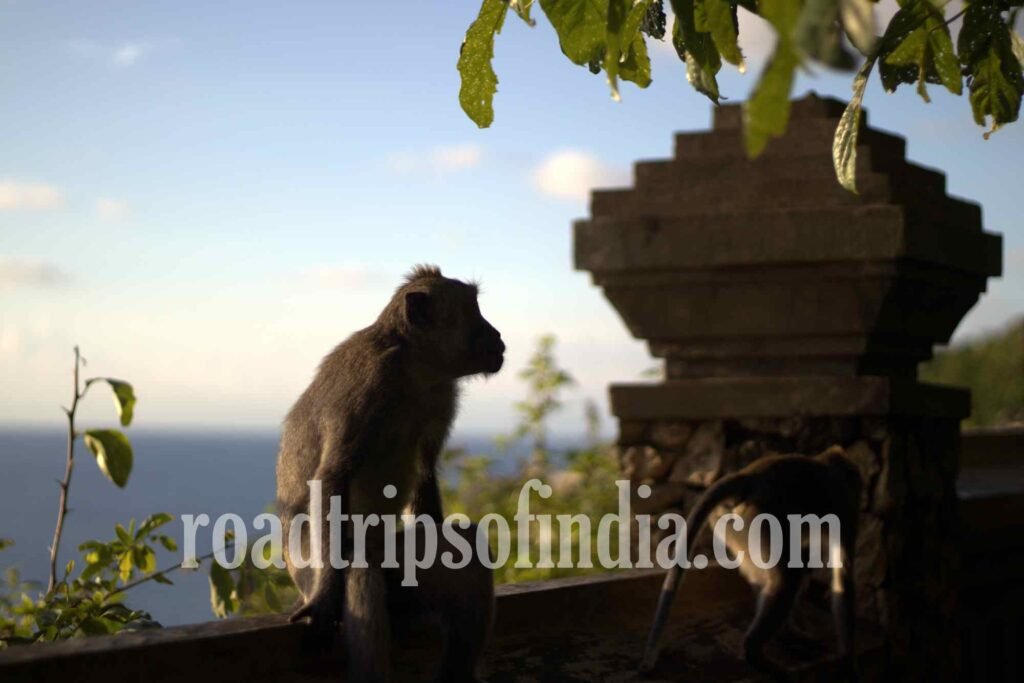
- A sign warns you about monkeys. You smile. Big mistake.
- You start walking along the cliff path.
- Wind picks up. Hair everywhere.
- Ocean sound gets louder.
- Suddenly… the temple appears.
No dramatic entry. No grand gate moment.
It just exists.
You walk around the perimeter. You stop often. Not intentionally. You just do.
Sunset time approaches. Crowd thickens.
Phones come out. Silence reduces.
Still, when the sun dips into the ocean, something shifts. Even the noisy ones go quiet for a few seconds.
How it was earlier vs how it is now
Earlier, Uluwatu Temple was mainly visited by pilgrims and felt quieter and more open.
Today, it is well-organised with clear walking paths, security, and many visitors, especially during sunset.
It hasn’t lost its charm, but the experience now depends a lot on when you visit.
Things people usually miss (don’t be that person)
- The side paths away from the main sunset crowd
- Watching waves instead of filming them
- Reading about Nirartha before visiting
- Securing glasses, caps, phones (monkeys don’t steal, they negotiate)
- Sitting down quietly for 5 minutes — yes, just sitting
Most people rush.
Uluwatu punishes rushing with nothing memorable.
Practical tips nobody tells you
- Don’t carry loose items. Monkeys here are professionals.
- Sunglasses = liability
- Go slightly before sunset, not exactly at sunset
- Wear footwear with grip — paths can be uneven
- If scared of heights, stay closer to inner paths
- Don’t argue with monkeys. Ever.
Also, temple guards help retrieve stolen items — for a banana bribe.
True story.
Best time to visit
Late afternoon is best.
4:30 PM to 6:30 PM.
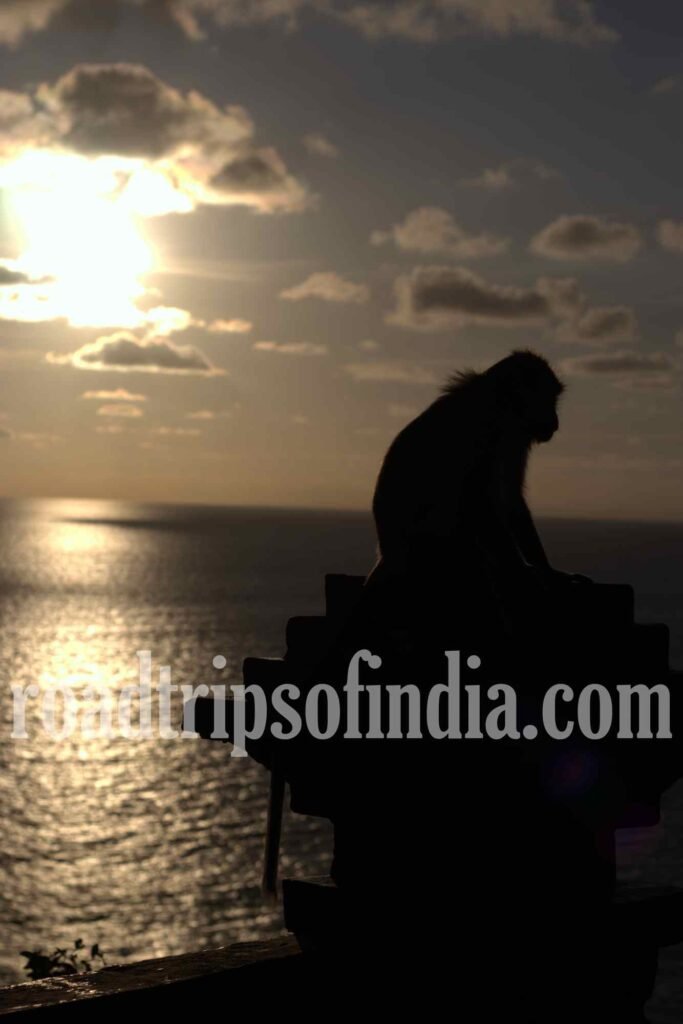
Morning is peaceful, yes. But the real emotion of Uluwatu comes with sunset light and crashing waves below glowing orange.
Avoid rainy evenings if possible. Wind + rain here is no joke.
Timings & tickets
- Temple timings: 9:00 AM – 7:00 PM
- Entry fee:
- Adults: IDR 50,000
- Children: IDR 30,000
- Sarong included in ticket
Prices may change slightly, but nothing dramatic.
How to reach
Uluwatu Temple is in South Bali, about:
- 1.5 hours from Ubud
- 45–60 minutes from Seminyak / Kuta
Best options:
- Private cab
- Scooter (only if confident)
- Day tour (less flexible)
Public transport is unreliable here.
Planning the trip from India
Visa
Indians get Visa on Arrival for Indonesia. Easy process. Carry passport, return ticket.
Flights
Direct flights from:
- Delhi
- Mumbai
- Bengaluru
Otherwise, one-stop via Singapore or Kuala Lumpur.
Currency
Indonesian Rupiah (IDR).
Carry some cash. Cards not accepted everywhere near temples.
SIM
Buy at airport or local stores.
Telkomsel works best.
Food
Nearby cafés serve decent food, but eat before coming if you get hungry easily. Temple area food options are limited.
Common mistakes to avoid
- Visiting only for photos
- Standing too close to cliff edges
- Ignoring sarong rules
- Trusting monkeys
- Rushing out immediately after sunset
Give it time. It deserves that.
Kecak dance at Uluwatu – we almost skipped it (and I’m glad we didn’t)
Honestly, we did not plan to stay till evening.
It was our initial day in Bali. Jet lag was already hitting hard. Our legs were tired, head was heavy, and all we wanted was to go back, eat something simple, and sleep properly. While walking around uluwatu temple, we even discussed — let’s skip the evening thing and leave early.
At that time, the Kecak dance was not even in our plan.
But later, we saw a short video online of the Kecak dance at Uluwatu. Sunset. Fire. Chanting. Cliff in the background. And suddenly both of us looked at each other and said — okay, maybe we should stay.
That “maybe” turned into one of the best decisions of the trip.
The waiting, the queue, and the doubt
By the time we decided, it was already late afternoon.
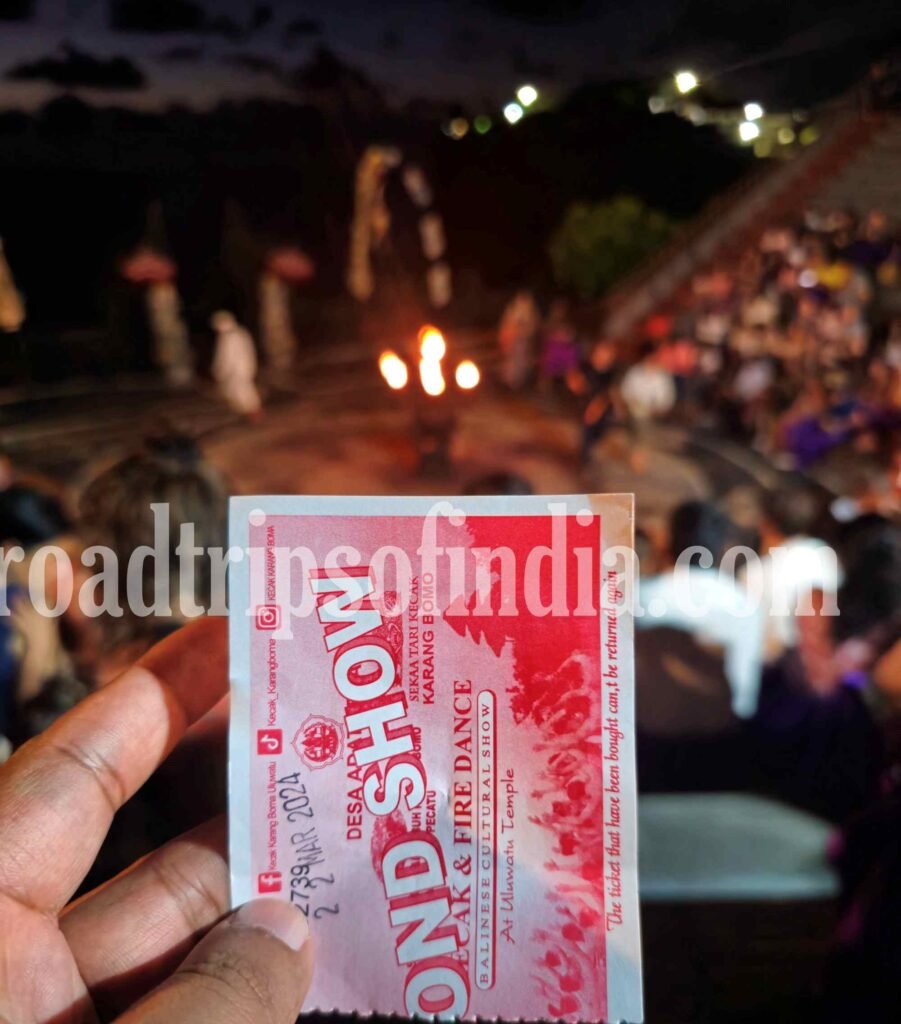
The queue for tickets was long. Really long.
People standing, waiting, checking watches, asking guards about the next slot. For a moment, I again felt — why did we do this? We could have been resting now.
Tickets are limited. Seats are limited. Time slots matter.
And yes, the waiting is real.
But somehow, we stayed.
Looking back now, I feel that waiting was also part of the experience.
When the performance started… everything changed
The moment the chanting began — chak chak chak chak — something shifted.
No instruments.
Only human voices.
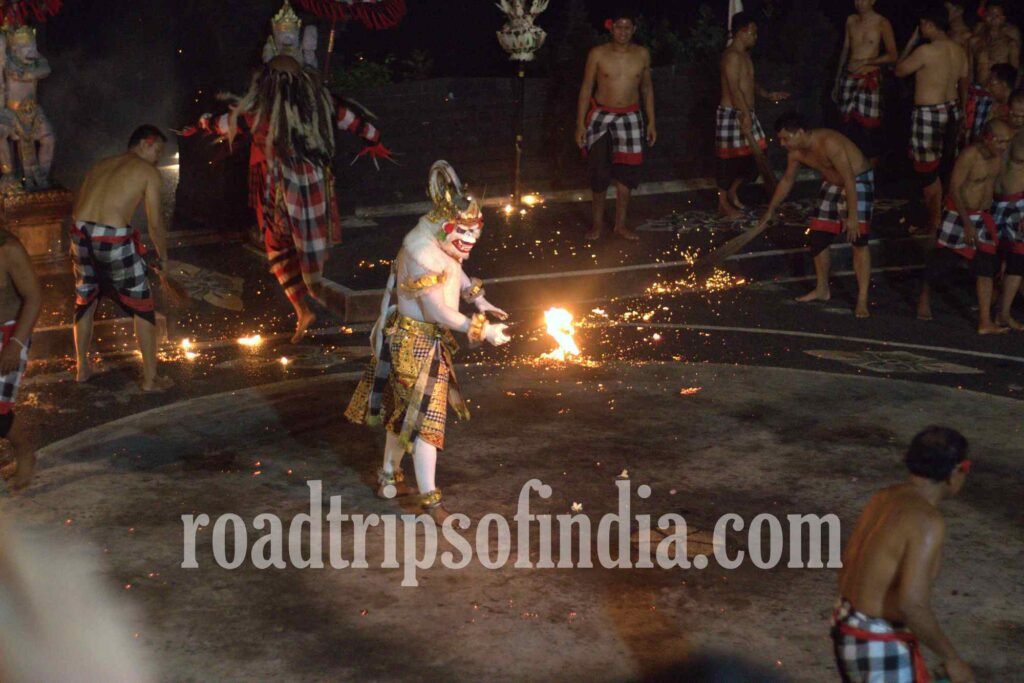
Dozens of men sitting in a circle, rhythm created only by sound and breath. And behind them… the sky slowly changing colour. Orange. Pink. Grey. Then dark.
They performed Ramayana.
And this part touched me deeply.
As Indians, we instantly connected.
Ram.
Sita.
Hanuman.
Different language. Different expressions. But the soul of the story felt familiar. Very familiar.
It reminded me of our childhood Ramleela performances back home. The same emotions, just expressed in a different cultural style.
Hanuman stole the show (and hearts)
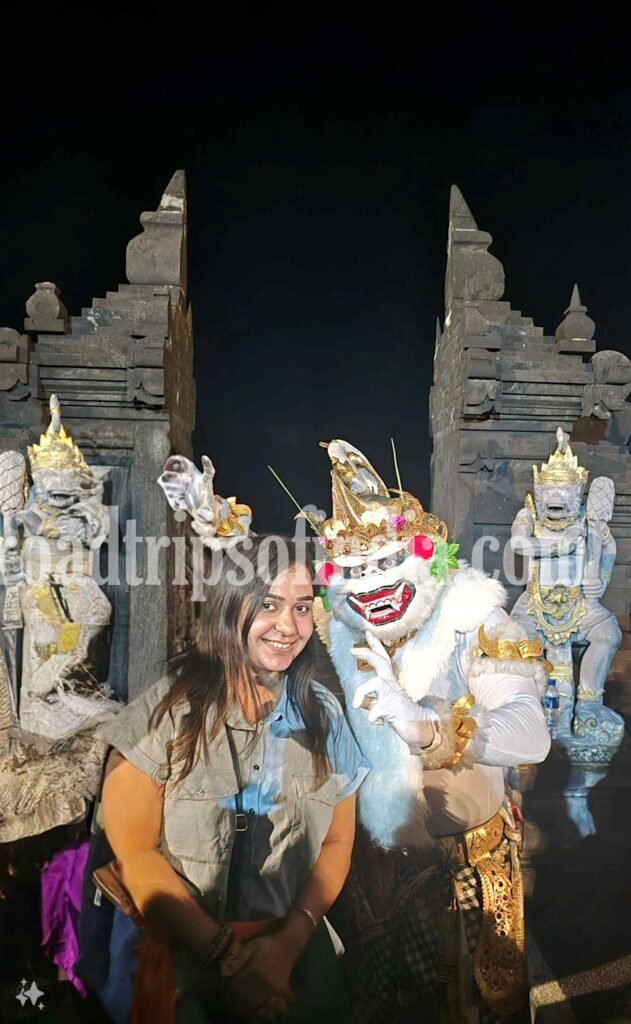
The person who played Hanuman was brilliant.
Not just acting — living the character.
He interacted with the audience freely. Sitting beside people. Teasing them lightly. Making everyone laugh. Even those who didn’t understand anything still smiled.
It didn’t feel staged or forced. It felt playful, natural, warm.
For a moment, the boundary between performer and audience disappeared.
The fire show – pure goosebumps
And then came the fire.
I’m not exaggerating — it was mesmerizing.
Fire glowing against the night sky. Chants growing louder. Movements becoming intense. The ocean somewhere below, invisible but present.
I forgot about jet lag.
totally forgot about tired legs.
I was just watching.
Fully present.
Photos, smiles, and one memory I’ll keep
At the end of the performance, we were allowed to take photographs with the performers.
I took mine with Hanuman.
That photo still makes me smile. Not because it’s perfect. But because it reminds me of how close culture can feel, even when you are thousands of kilometres away from home.
Was it worth waiting?
Yes. Completely.
Even if you are tired, if you feel like skipping, even if the queue looks annoying.
Stay. Watch the Kecak dance.
I would genuinely suggest it to anyone visiting Uluwatu Temple.
It’s not just a performance. It’s emotion, culture, fire, and memory — all together.
And sometimes, the experiences we almost skip… become the ones we remember the most.
Map location
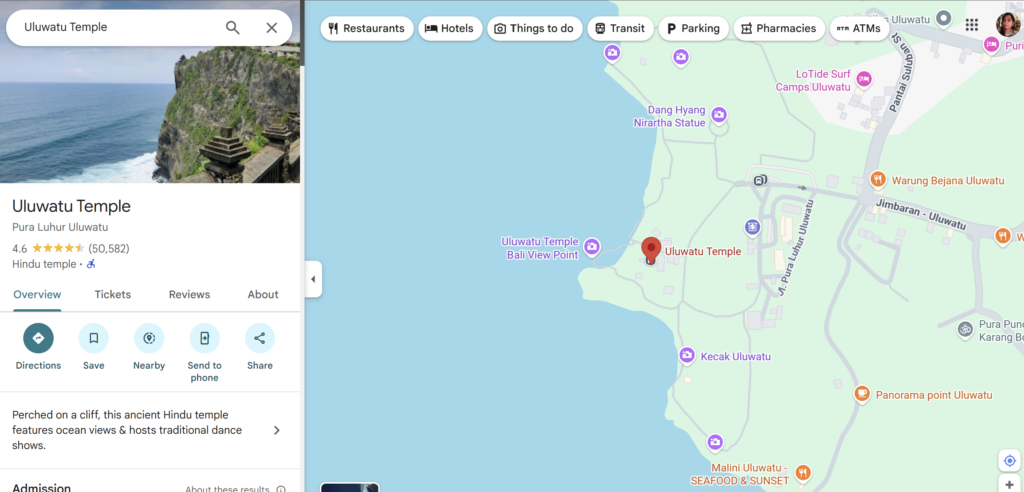
Just search Uluwatu Temple, Bali on Google Maps.
Signal is decent. Offline maps recommended.
FAQs
Q1. Is Uluwatu Temple safe?
Yes, but be alert near cliffs and monkeys.
Q2. Can women visit during periods?
Traditionally discouraged. Respect local customs.
Q3. Is photography allowed?
Yes, except inside inner sanctum areas.
Q4. Is it crowded every day?
Mostly during sunset hours. Mornings are quieter.
Conclusion
I didn’t light a lamp here, but did pray in words.
I just stood.
Sometimes travel doesn’t give answers. It gives stillness. Uluwatu Temple gave me that. For a few minutes, the mind stopped planning the next stop. The next reel. The next meal.
Just waves. Wind. Stone.
And maybe that’s enough.
If you are going to Bali, I’ve also shared my personal experiences from a few other beautiful temples that are worth visiting.
Ulun Danu Beratan Temple – https://roadtripsofindia.com/ulun-danu-beratan-temple-bali-indonesia-complete-guide-you-need-to-know/,
Tanah Lot Temple – https://roadtripsofindia.com/tanah-lot-temple-bali-indonesia-ultimate-guide-you-need-to-know/, and
Besakih Temple – https://roadtripsofindia.com/besakih-temple-bali-indonesia-ultimate-guide-on-how-to-visit-everything-you-need-to-know/. Each place has a different feeling, and I’ve written honestly so you can plan better, not just take photos.
To know us more follow us on instagram: https://www.instagram.com/roadtrips_of_india/