
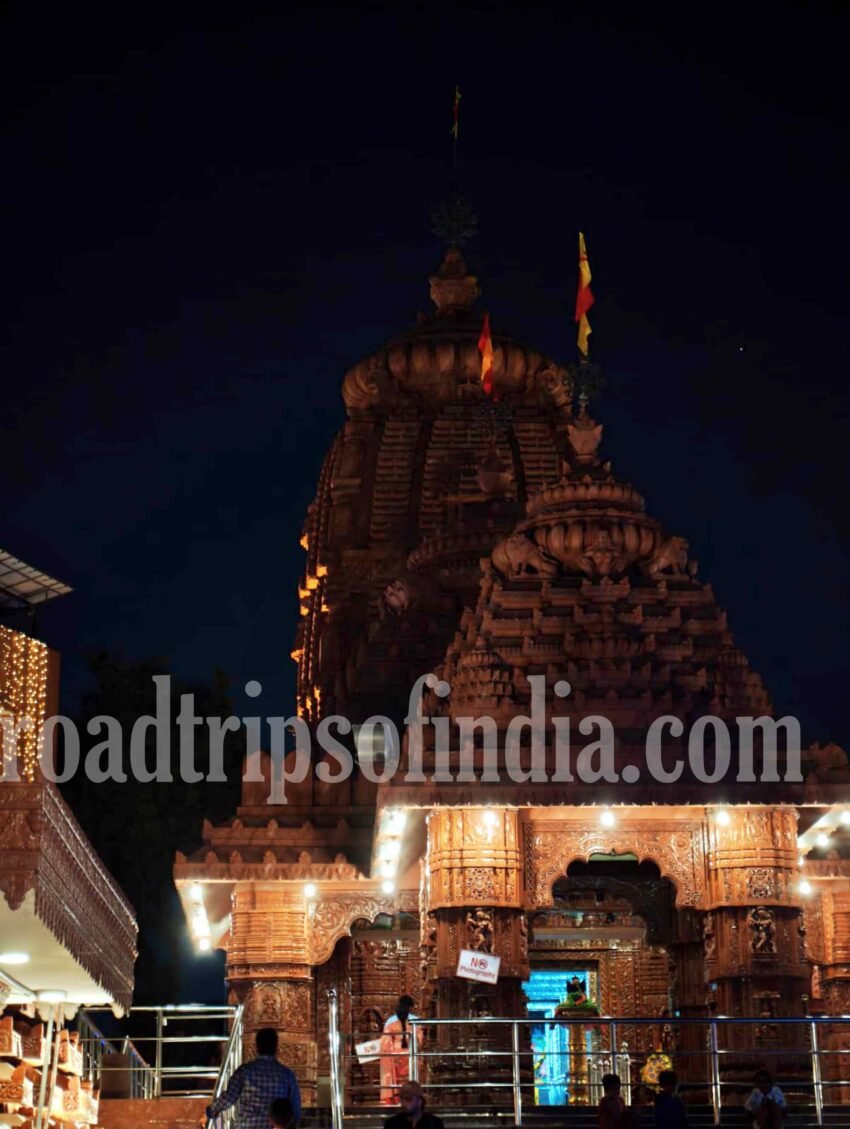
Hyderabad Jagannath Temple Quick travel guide to history, calm atmosphere, rituals, architecture and travel tips for a peaceful visit.
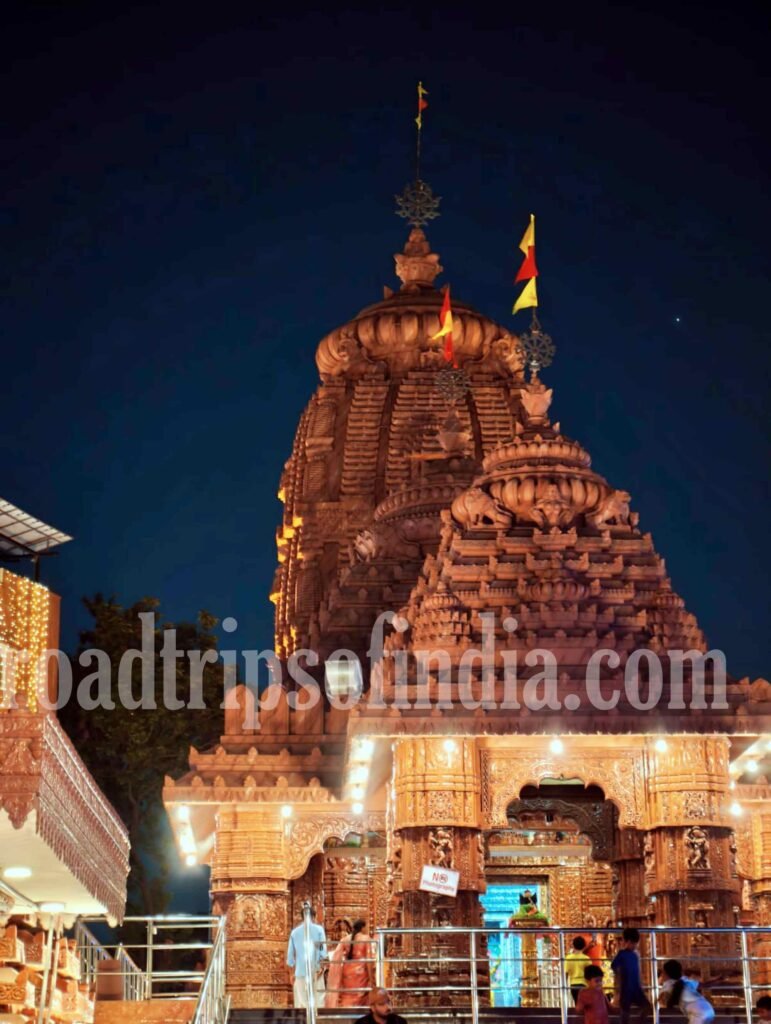
A Quiet Surprise in the Middle of Banjara Hills
It’s strange how certain places sit quietly in the middle of a buzzing city and yet feel completely untouched by the noise around them. The Hyderabad Jagannath Temple is one of those spaces. I had passed by Banjara Hills Road No. 12 so many times—coffee shops, boutiques, people rushing in and out of offices—and for some reason never noticed that a bright red temple stood just a little above eye level.
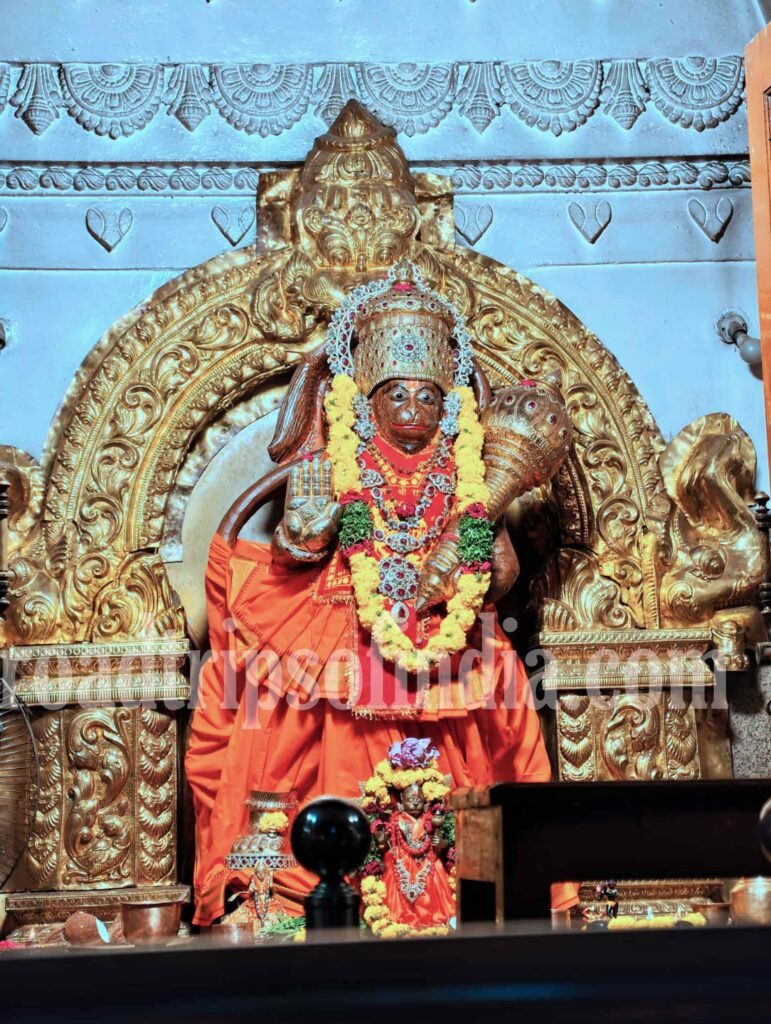
When I finally stopped to visit, the first thing I felt wasn’t spiritual—it was relief. Relief from honking, from a packed day, from the constant mental chatter that cities somehow push into your mind. The moment I stepped inside the gate, something softened. The sounds dropped, the air slowed down, and the bright sandstone almost felt warm even though the sun wasn’t that strong.
It is not the kind of temple where people push and rush. It has a sort of gentle personality. And that’s really the best way to describe the Hyderabad Jagannath Temple—a gentle place in a fast neighborhood.
Why Hyderabad Jagannath Temple Is Worth Visiting
People visit temples for different reasons. Some go with faith, some with curiosity, some because architecture fascinates them, and some simply because they want a break. I’ve visited this temple now a few times, each visit for a slightly different reason. And somehow, it works for all of them.
A Calm Spot in a Busy City
The moment you step inside, the feeling changes. I don’t know exactly why—it might be the open courtyard, or maybe the red stone absorbing sound, or maybe just the way people naturally lower their voices here. Whatever the reason, this temple gives you a kind of pause that we don’t get often in the middle of a working day.
I saw people sitting on the steps with no particular urgency. A mother helping her child tie his sandal slowly. An elderly man leaning on the railing, breathing deeply as if he came here only for that small moment of rest. These tiny observations make the place feel personal.
A Blend of Culture and Clean Design
The structure is inspired by the famous Jagannath Temple in Puri, but Hyderabad’s version feels lighter and easier to move around. You’re not overwhelmed by huge pillars or crowded courtyards. Everything is just enough—enough detail to admire, enough space to breathe.
Good for Short and Long Visits
Some places demand a lot of time. This temple doesn’t. You can walk in for a 10-minute break or stay for 45 minutes simply watching the light change on the sandstone. No one hurries you.
A Temple That Feels Comfortable
A lot of temples can feel intense—loud bells, heavy incense, long queues. But this one has a softer rhythm. Even the rituals here feel gentle, as if the place itself knows that people come for peace.
A Bit of History and a Few Interesting Facts
Even though the Hyderabad Jagannath Temple looks traditional, it’s not ancient. It was built by the Odia community living in Hyderabad. They wanted a place where they could celebrate their traditions without having to travel far during festivals. Instead of copying the original temple exactly, they chose a balanced design that matched both cities—Puri’s legacy and Hyderabad’s modern energy.
The Kalinga Style Influence
The tall tower, the neat curves, and the patterns all belong to Kalinga architecture. If you have ever visited Odisha or seen photos of old temples there, you will recognise the style immediately. But here, it feels more approachable—like someone gently simplified the design without removing its soul.

The Idols of Jagannath, Balabhadra and Subhadra
Inside the sanctum, the idols carry their classic Odia look—wide eyes, rounded faces, bright colours. There’s something calming about them. They feel friendly, almost like they’re happy you came.
The Busy and Beautiful Rath Yatra
The temple’s biggest event is Rath Yatra, and Hyderabad turns surprising shades of Odisha during that time. Colourful chariots, people in traditional attire, rhythmic chants—it feels like a festival that travelled across states but still kept its heart.
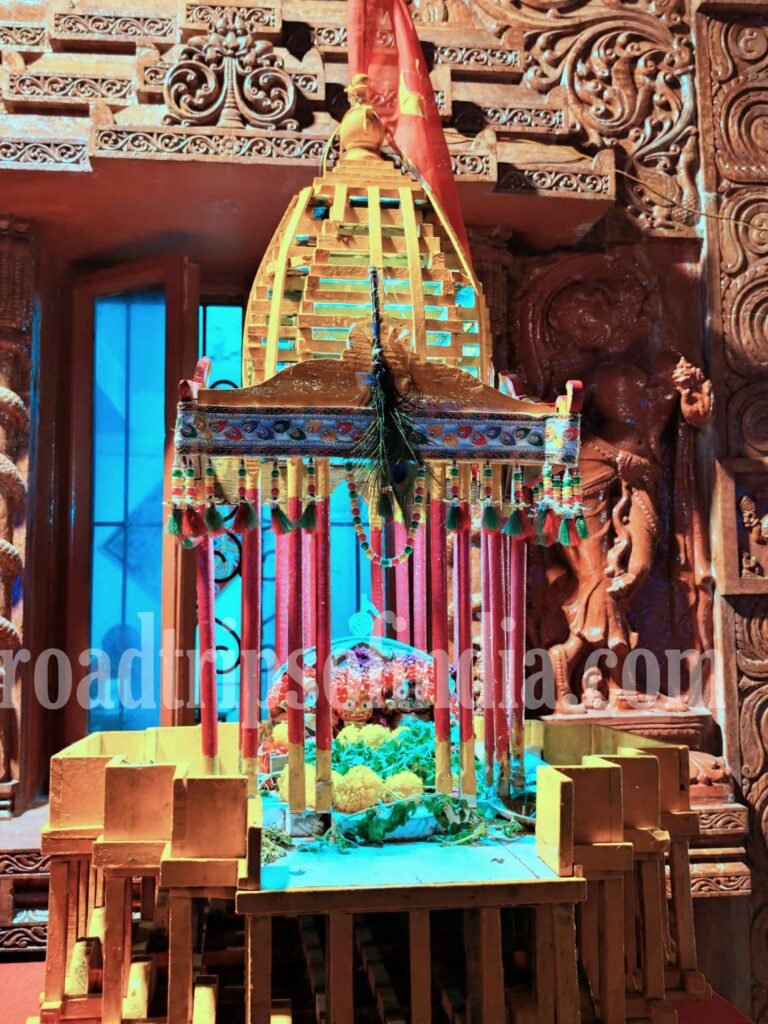
Architecture That Stands Out Without Trying Too Hard
I think what stays with you the most is the colour. The red sandstone is bold but not loud. It has a certain warmth that makes the temple look alive. In the morning light, the stone glows softly. In the evenings, the shadows create beautiful textures.
The Shikhara
The tower rises confidently but not dramatically. It has the typical Kalinga slope, narrowing gently as it reaches the top. When you stand near the entrance and look up, the height feels just right—not intimidating, not too low.
Carvings and Motifs
If you walk slowly around the temple, you’ll notice small carvings—flowers, lines, and figurative patterns. They are not extremely detailed, but they are done with care. You get the feeling that the artisans wanted the temple to look calm, not crowded.
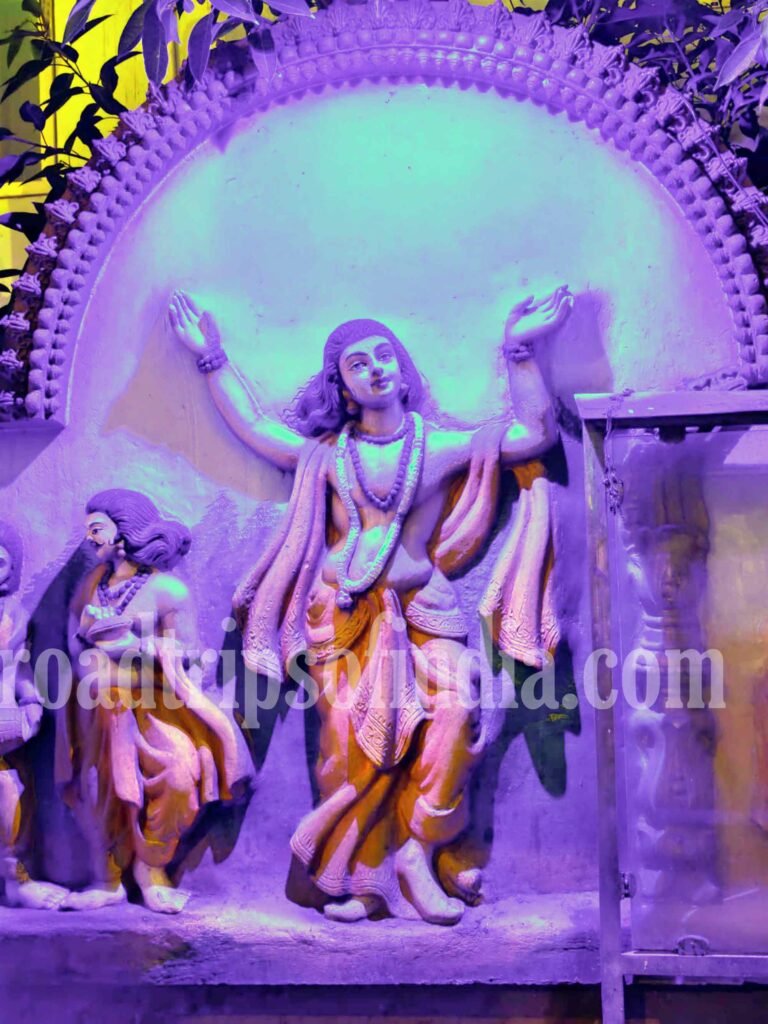
Smaller Shrines
There are smaller shrines placed around the main one. Other dieties are kept like Lord Hanuman, Navagraha, Lord Shiva, Lord Ganesha, Goddess Laxmi.
The Courtyard
One of my favourite parts is the open courtyard. It gives the whole place a feeling of space. You can stand there and just watch people moving gently around you. Kids running, families talking softly, priests walking with purpose—it’s a quiet kind of life happening all around.
Best Time to Visit the Hyderabad Jagannath Temple
You can visit any time, but certain hours make the experience more enjoyable.
Early Morning
The temple almost feels sleepy in the morning. The light is soft, and the few people there move at their own slow pace. If you enjoy peaceful moments, mornings might be your favourite.
Evening
Evenings here are magical. The sandstone glows under the lights, and the sky turns shades of blue and purple. The aarti sound floats through the courtyard. Even if you came without any intention of staying long, evenings tend to hold you for a while.
Weekdays vs Weekends
Weekdays are quieter. Weekends bring more families, friends and more activity. Both have their charm, so it depends on what mood you’re in.
Festivals
If you like cultural experiences, visit during Rath Yatra. If you prefer silence, avoid festival days—they get lively, colourful and beautifully chaotic.
How to Reach the Temple
The temple is in Banjara Hills, Road No. 12. This area is easy to reach from almost anywhere in Hyderabad.
By Car
From Jubilee Hills or Panjagutta, it takes around 10–20 minutes. Parking is available but gets tighter during evenings.
By Auto or Cab
Autos and cabs drop you right at the entrance. It’s convenient if you aren’t familiar with the area.
By Bus
Local buses stop near Road No. 12. From there, it’s a short, easy walk.
Map Pin
Google Maps: Hyderabad Jagannath Temple, Banjara Hills
Helpful Things to Know Before You Visit
These small details make your visit smoother.
Two Parking Spots (Most People Don’t Know About the Second One)
The temple actually has two parking areas.
Parking 1: The older, more commonly used one near the main road. It fills up fast, especially evenings.
Parking 2: A newly opened backside road, which is much more convenient. If you come during peak hours, choose this road—you’ll thank yourself.
Shoe Rack Facility
Near the entrance, there is a neat and organised shoe rack counter. They charge ₹10 per pair of footwear. It’s quick, efficient, and safe. They have qr code as well for payment but sometimes they ask for cash.
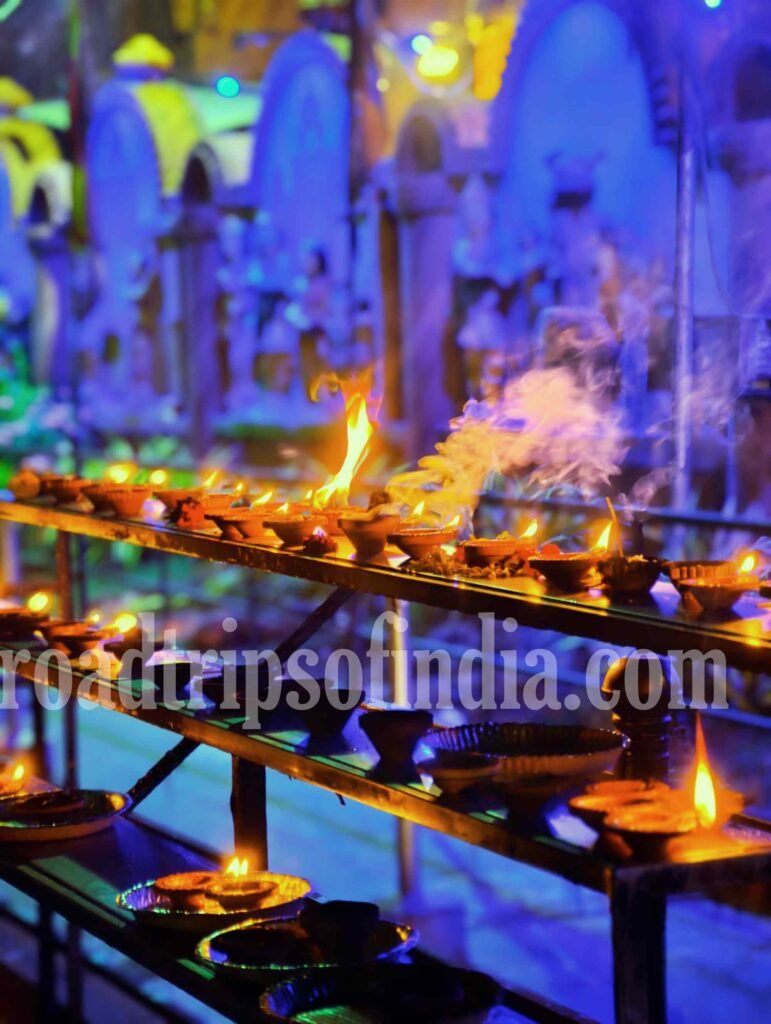
Small Shops Selling Diyas (Deepaks)
Before entering the main mandir area, you’ll find tiny shops selling deepaks (diyas) and other puja essentials. Many visitors light these inside the temple campus. It adds a warm glow and makes the place feel spiritually alive.
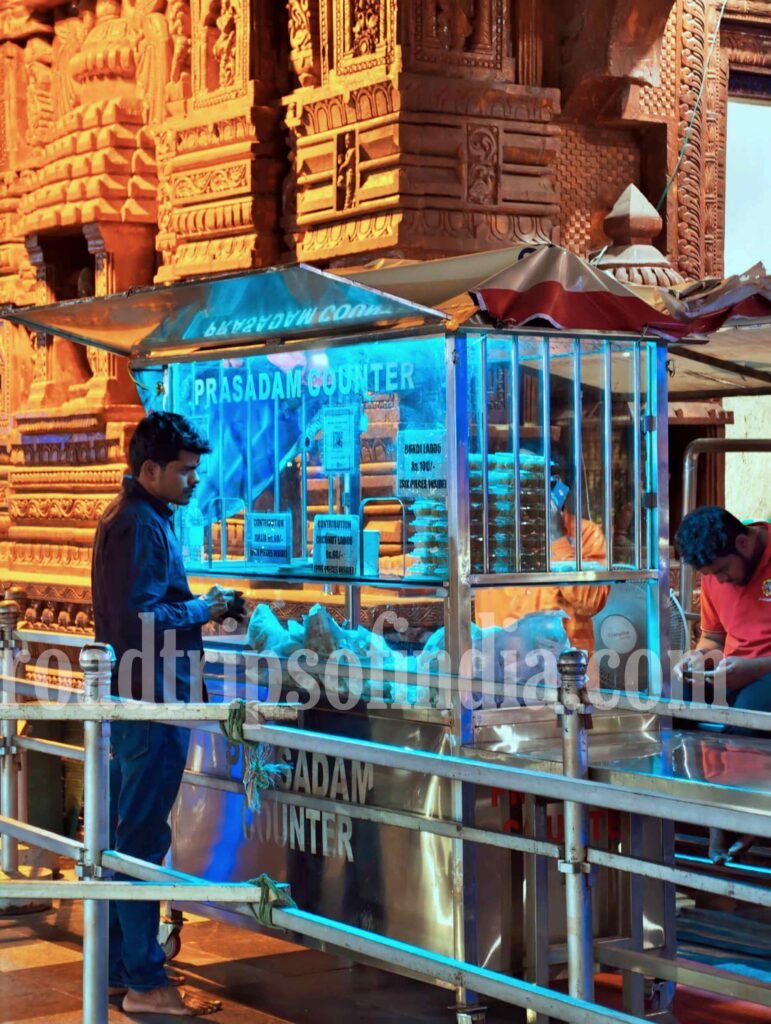
Prasad Counter With Delicious Gaja/Khaja
Outside the temple, there is a prasad counter where you can buy gaja/khaja, the classic Odisha sweet. It’s crunchy, mildly sugary, and honestly, surprisingly tasty. A great gift for family or friends.
Free Prasad Served Inside (We Got Lemon Rice!)
Apart from the purchasable prasad, the temple also offers free prasad.
When we visited, they served lemon rice in a dona—warm, tangy, comforting.
We sat on the ground and ate slowly. Something about eating prasad this way makes the whole visit feel pure and grounding.
Don’t Miss the Bhel Wala Outside the Main Gate
While leaving, look to your right—you’ll see a bhel wala thela. His bhel is simple, crunchy, fresh and unexpectedly good. A perfect quick snack before you step back into the noise of Banjara Hills.
What Your Visit Might Feel Like
There’s no strict sequence you must follow. After leaving your footwear at the stand, you move along a clean path. People naturally form a smooth line. Inside the sanctum, the priests bless visitors with calm, unhurried gestures.
Once you step out, the courtyard usually invites you to slow down. I have seen people stand silently, looking up at the shikhara as if thinking about something they didn’t plan to think about. Others sit near the steps and simply breathe.
Something about the space makes you want to pause.
Photography Tips (From What I Observed)
- Sunset is the best time for warm tones.
- Stand slightly to the left of the entrance for a nice angle of the shikhara.
- Look for shadow patterns on the sandstone walls.
- Side corridors give aesthetically pleasing frames.
- Rainy days make the stone look richer and deeper.
Remember: photography is not allowed inside the sanctum.
Dress Code and Etiquette
You don’t need extremely traditional clothing, but modest attire feels more respectful. Silence is maintained naturally, so avoid loud conversations. Phones should ideally stay on silent. You can sit almost anywhere, as long as you don’t block a walkway.
Places to Explore Nearby Hyderabad Jagannath Temple
Since Banjara Hills is full of interesting spots, you can easily make a half-day plan around the temple.
KBR Park
A lovely green escape. Good for morning walks and birdwatching.
Cafés and Eateries
Road No. 12 is filled with cafés. After the temple visit, many people step out for a cup of chai or breakfast.
A Few Helpful Tips
- Visit mornings if you want quiet.
- Visit evenings if you want beauty.
- Carry water in summer.
- Weekdays = peaceful, weekends = lively.
- Festivals are colourful but crowded—choose based on your mood.
FAQs
What is Hyderabad Jagannath Temple known for?
Its Kalinga-style architecture, calm atmosphere and grand Rath Yatra celebrations.
Where is the temple located?
On Road No. 12, Banjara Hills, Hyderabad.
Entry fee?
Completely free.
What are the temple timings?
Morning darshan, mid-day closure, evening reopening 6 am–12 pm, 5–9 pm. Hours may shift on festival days.
Most popular festival?
The Rath Yatra, celebrated with colourful chariots and crowds.
Final Thoughts
Some places stay with you even after you walk out. The Hyderabad Jagannath Temple is one of those places. It doesn’t depend on size, age or drama to impress you. It simply gives you space. Space to slow down, to breathe, to step away from fast life without actually leaving the city.
Every time I visit, I walk out feeling a little lighter. And maybe that’s why this temple, even though it’s not very old, feels like it has already become an important part of Hyderabad’s cultural landscape.
If you are looking for a peaceful corner that blends tradition with modern comfort, you will find it here—quietly waiting for you on a busy road in Banjara Hills.
Planning to explore more spiritual places around Hyderabad? Don’t miss Swarna Shilpi Vivekananda Kali Mandir, Statue of Equality, and Swarnagiri Temple, Bhuvanagiri. Read our detailed travel guides to plan your visit with ease.
Also, you can checkout our instagram profile: https://instagram.com/roadtrips_of_india/
Related posts:
 Swarnagiri Temple Bhuvanagiri: ultimate guide how to do Peaceful darshan
 Ammapalli Temple Shamshabad – Ultimate Travel Guide with Everything You Need to Know Before You Go
 Kali Mandir Shamshabad Ultimate Guide – How to Visit, What You Feel, Everything You Need to Know Before You Go
 Padmanabhswami temple Travel Guide 2026: Everything you need to know